





Plant-based baked goods have moved out of specialty retail and into mainstream grocery, foodservice, and private label programs [LINK: market data source; add a specific statistic here once sourced]. If your retail buyer is stocking them and your foodservice customers are asking for them, your formulation team is probably already working on them.
The ingredient that makes or breaks a plant-based line is fat. Butter, lard, and every other animal-derived fat are out. Whatever replaces them has to do the same functional work in cookies, cakes, pie crusts, tortillas, and the fryer. If your shortening spec hasn’t kept pace with your product line, you’ll see it in texture, shelf life, and frying performance all at once.
Replacing Lard: A Market Access Decision
Lard and tallow immediately disqualify a product from vegan and plant-based claims. They also rule out kosher and halal programs, and retail channels where plant-based certification decides shelf placement.
The good news is that plant-based shortening can deliver the flakiness and tenderness lard is known for. It just gets there differently. Lard tends to form large fat crystals (the beta form), which contributes to its distinctive flaky layers. Commercial shortenings are typically engineered to stay in a smaller crystal form (beta-prime) that gives a smooth, plastic texture and traps air well. Getting a comparable pie crust or biscuit comes from matching the shortening’s solid fat content and plasticity to your mixing temperature and process, not from assuming any plant-based shortening will behave like lard.
That’s why the spec matters more than the category. A shortening matched to your product performs. A generic one picked off a price list often doesn’t.
FoodGrid’s All Purpose Shortening is fully plant-based, trans fat free, and formulated for the baking applications where lard or animal fats were previously used.
High-Ratio Shortening in Plant-Based Cakes and Muffins
Plant-based cake and muffin formulas lose both butter and eggs, which creates a gap in two places at once: aeration and moisture retention. High-ratio shortening addresses both.
What is a high-ratio shortening? The name comes from high-ratio cake formulas, where sugar weight exceeds flour weight. Standard shortening can’t hold that much sugar and liquid in a stable batter. High-ratio shortening contains a higher level of emulsifiers that let it do so, giving a finer crumb, better moisture retention, and more consistent volume.
In a conventional cake, eggs do much of the emulsifying and structure-building. In an egg-free formula, the shortening has to carry more of that load. A high-ratio shortening disperses evenly through the batter, holds air during mixing (high-ratio cakes are usually made with single- or two-stage mixing rather than creaming), and keeps the batter stable through the bake without egg protein.
For R&D teams at commercial scale, the difference shows up in crumb uniformity, finished volume, and texture at day seven compared with standard shortening at the same usage rate.
FoodGrid’s All Purpose High Ratio Shortening is formulated for high-emulsifier performance in plant-based cake and muffin programs, with vegan, non-GMO, and trans fat free documentation available at onboarding.
Palm Shortening and the Sourcing Question
Palm is a common base for plant-based shortening because it offers a wide plasticity range, strong oxidative stability, and the solid fat profile baking needs, all without animal inputs.
But palm sourcing is under scrutiny from retail buyers, foodservice operators, and ESG teams, and some vegan consumers avoid palm products altogether. For a plant-based line, you need a sourcing story you can document.
FoodGrid’s shortening line uses RSPO Mass Balance palm oil. Mass Balance certification tracks certified sustainable palm oil through the supply chain in proportion to the volumes used, so certified and conventional oil may be mixed along the way. That makes it strong supply chain documentation for retailer audits and ESG reporting. If you’re planning on-pack sustainability claims, check RSPO’s rules for what Mass Balance products can say, since they’re more limited than fully segregated oil.
Tortillas and Flatbreads
Tortilla makers need three things from a plant-based shortening: pliability at both ambient and refrigerated temperatures, stability at griddle contact, and even distribution through the dough to prevent cracking when the tortilla is folded or rolled.
Lard has traditionally been the tortilla fat of choice because of how it coats starch and keeps the dough pliable. A plant-based replacement has to match that behavior under your specific mixing and processing conditions.
The critical test is rollability after cold storage. A tortilla that passes at room temperature can still crack when a foodservice kitchen pulls it from the walk-in and warms it. Test across the full temperature range your product will see, from your plant to your customer’s kitchen. For institutional accounts, a tortilla that fails at the end user means a complaint and a return.
Also confirm the shortening’s smoke point and oxidative stability at your actual griddle temperature. A fat that breaks down there produces off-flavors and uneven surface browning.
FoodGrid’s All Purpose Shortening and palm fruit shortening are both options for plant-based tortilla programs, and our team can help match the spec to your line.
Frying Plant-Based Donuts and Snacks
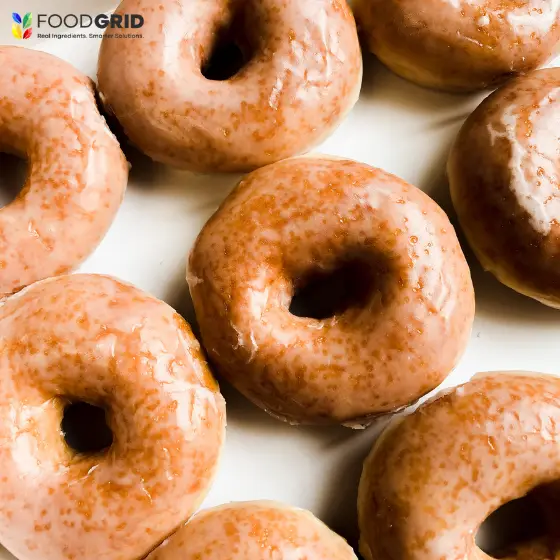
Plant-based donuts, fried pies, and snacks need a frying fat that performs like a conventional one, with no animal-derived ingredient anywhere in the spec.
The requirements are specific: thermal stability at continuous fryer temperatures of 350–375°F (177–191°C), controlled oil absorption so the product isn’t greasy, consistent color across the run, and oxidative stability that extends fryer life.
A frying fat that isn’t matched to your fryer temperature and cycle length will give you uneven color, higher absorption, and faster breakdown. Every one of those adds cost, and the savings from a cheaper fat disappear quickly when you’re changing oil more often.
The number to request is the oxidative stability index (OSI). A higher OSI generally means longer fryer life and lower fat consumption per unit.
FoodGrid’s Donut Fry Shortening is formulated for industrial frying with the thermal stability and absorption profile high-volume plant-based programs need.
What Matters More Than the Brand Name
A well-known name on the container doesn’t tell you whether a shortening is right for a plant-based program. The documentation does. Before approving any shortening, ask:
- Is every ingredient plant-based? Including emulsifiers. Some mono- and diglycerides are derived from animal sources, so confirm the source of every component, not just the base fat.
- Is it trans fat free? Get it in writing, not from a marketing sheet.
- Is palm-derived oil RSPO certified? Retail buyers will ask during supplier audits.
- Are there allergen statements at product and facility level? Plant-based consumers often have allergen concerns too.
- What’s the solid fat content profile at your process temperatures? SFC at 50, 70, 92, and 104°F (10, 21, 33, and 40°C) tells you how the fat behaves at every stage. A melting point alone doesn’t.
One Supplier for the Full Range
A bakery producing plant-based breads, cookies, cakes, donuts, and tortillas under one roof needs shortening for every application, ideally without a separate supplier for each:
- All-Purpose Shortening for breads, rolls, biscuits, pie crusts, cookies, and crackers.
- All Purpose High Ratio Shortening for cakes, muffins, and cupcakes where emulsifiers replace egg structure.
- Donut Fry Shortening for continuous frying of donuts and snacks.
Every FoodGrid shortening is plant-based and trans fat free, with COA per lot, SFC data, RSPO certification, allergen statements, and vegan confirmation available before your first order ships.
Whether you’re launching a new plant-based line or removing animal fats from an existing one, our ingredient team can support you from sample to scale. Contact us or review the full shortening range at foodgridinc.com.
Real Ingredients. Smarter Solutions.


