





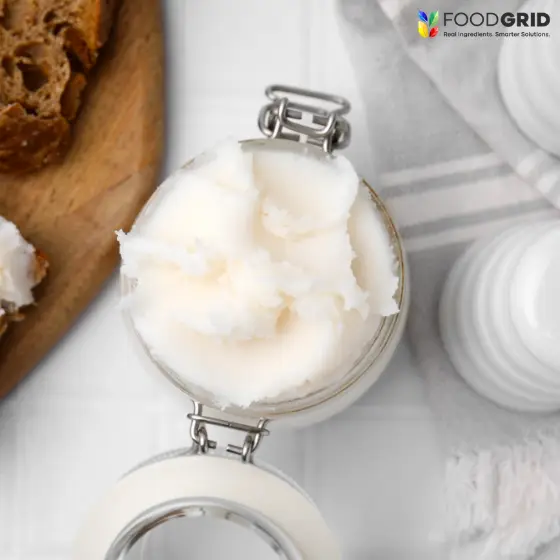
Everyone plans for a hot warehouse. Almost nobody plans for a cold one. As temperatures drop through October and into winter, shortening faces a different set of risks than it does in summer, and most quality and operations teams are watching for the wrong problem at the wrong time of year.
Heat gets the attention because oxidation and rancidity are the more commonly discussed failure modes. Cold creates a quieter problem. It changes the physical structure of the fat itself, sometimes permanently, in ways that do not always show up until the product hits a mixer weeks later.
Why Cold Is Not the Opposite of Safe
Shortening is close to 100 percent fat with no moisture, so it does not spoil the way fresh food does, and lower temperatures do slow oxidation, which is generally a good thing. The risk with cold is different. It is physical, not microbial.
Shortening relies on a specific crystal structure to deliver its texture and performance. Extreme or repeated cold exposure can shift that structure, a process food scientists call fat bloom or crystal transformation. Once that structure changes, it does not always reverse when the product warms back up, which means a shortening that got too cold in transit or storage can arrive looking fine and still perform inconsistently once it reaches your mixer.
Where the Real Risk Sits: Transit, Not Storage
Most operations teams focus cold weather planning on the warehouse, but the highest risk window is often the truck. Freight industry research on winter logistics confirms this is a real and common risk, not a rare edge case. Traffic Tech notes that food and beverage shipments face real risk of freeze damage without proper temperature management during winter transport, and that this risk affects every stage of a shipment’s journey, not just the warehouse at either end.
Zipline Logistics points out that freezing risk during transit runs from October through March across large parts of the country, with the Northeast, upper Midwest, and Rocky Mountain regions seeing dangerous cold especially early in that window. A shortening delivery scheduled for what looks like a mild October day can still pass through a much colder overnight stretch if the truck sits idle or the route crosses a colder region than your own facility experiences.
What to Confirm With Your Carrier Before Cold Weather Sets In
Ask whether your shipments travel in a temperature-controlled trailer, not just a standard dry van. A standard trailer offers no real protection against freezing temperatures during an overnight stop or an extended transit time.
Confirm whether your carrier offers freeze protection as a standing option, not just an emergency response. Most carriers can add this protection to a bill of lading, but only if it is requested before a shipment moves, not after a problem is discovered on arrival.
Ask about overnight and weekend handling specifically. A truck sitting idle overnight in a cold region faces the highest risk of all, since temperature drops the longest during these unmonitored stretches.
What to Check the Moment a Cold Weather Shipment Arrives
A shortened delivery that traveled through genuinely cold conditions deserves a quick visual and texture check before it goes into general inventory, rather than an assumption that a sealed container protected it automatically.
Check for a grainy or crumbly texture rather than the smooth, workable consistency the product should have at room temperature after it has had time to equalize.
Look for visible separation or a mottled surface appearance, which can signal that the fat’s crystal structure shifted during transit.
Confirm the product has fully returned to a normal working temperature before testing it, since a cold shortening can feel harder and more brittle simply from temperature alone, separate from any structural change. Give it adequate time to reach room temperature before concluding.
Warehouse Storage Carries Its Own Cold Weather Risk
Storage conditions change in winter even inside a facility that feels generally comfortable. Areas near loading docks, exterior walls, or poorly insulated storage zones can run meaningfully colder than the rest of a warehouse once outside temperatures drop, the same way those same areas run hotter in summer.
This matters because repeated temperature swings, cold included, accelerate the kind of fat oxidation and structural breakdown that proper storage is meant to prevent. Storage guidance compiled by the Global Cold Chain Alliance confirms that temperature fluctuations during storage, not just the average temperature, drive much of the real degradation risk in fat-based products, which applies just as much to an unexpected cold snap near a dock door as it does to a summer heat spike in the same spot.
Palm-Based Shortening and Cold Weather Performance
Palm shortening and palm fruit shortening naturally have a higher saturated fat content than many alternative vegetable oil-based shortenings. This generally supports more stable performance across a range of storage temperatures, but it does not make a product immune to extreme cold exposure during transit. Confirm your supplier’s documented cold weather handling guidance specifically, rather than assuming a palm-based formulation removes the need for freeze protection altogether.
Building a Seasonal Handoff Into Your Storage Protocol
Many quality teams already have a summer storage protocol covering heat and humidity. Few have built an equivalent protocol for the cold months, even though the risk, while different in mechanism, is just as real. As October temperatures begin dropping, confirm your team has a written cold weather addendum covering carrier requirements, receiving inspection steps, and any seasonal shift in which storage zones are considered lowest risk.
What to Confirm Before Cold Weather Fully Sets In
- Temperature-controlled transport or freeze protection confirmed with your carrier in writing, not assumed
- A receiving inspection step specific to cold weather shipments, checking texture and appearance before stock enters general inventory
- Storage zone mapping, identifying which areas of your facility run coldest near exterior walls and loading docks
- Supplier guidance on cold weather handling, confirmed for your specific shortening formulation
- A written cold weather protocol, separate from but equally detailed as your existing summer storage practices
FoodGrid Supplies Shortening Backed by Climate Controlled Distribution
FoodGrid’s All Purpose Shortening ships from climate-controlled distribution centers built to protect product quality through every season, not just the warmer months. Our Quality Control group backs every batch with documentation your team can rely on, no matter what weather it travels through.
Our Purchasing team can confirm cold weather shipping protections for your account before winter conditions set in.
Confirm Your Cold Weather Protections Before the First Freeze
Do not let a cold snap in transit undo a formulation your team spent months perfecting. FoodGrid confirms climate-controlled shipping and handling before your next cold season order.
Request a sample or connect with our ingredient team at FoodGrid Inc.
Real Ingredients. Smarter Solutions.


