





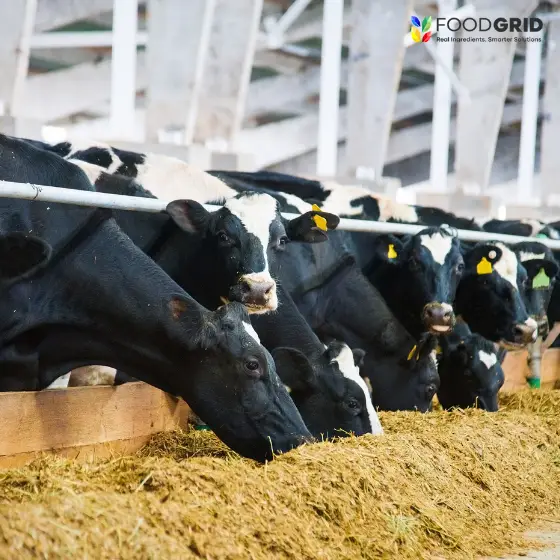
As fourth-quarter temperatures drop across major dairy-producing regions, commercial feed buyers, operational managers, and herd nutritionists face a critical dual challenge: navigating elevated winter maintenance energy demands while safeguarding income over feed cost (IOFC) in volatile commodity markets. The transition period—specifically the 21 days prior to calving—serves as the primary operational cornerstone determining the biological and financial success of the entire upcoming fall and winter lactation cycle.
Nutritional or management missteps in the close-up pen inevitably compound during cold weather. Subclinical metabolic disorders, suppressed dry matter intake (DMI), reduced peak milk yield, and excessive early-lactation body condition loss erode farm profitability. Constructing a resilient Q4 feeding program requires integrating precise transition management, bioavailable mineral strategies, and disciplined commodity sourcing.
1. Controlled-Energy Dry Cow Diets vs. Energy Density
Historically, transition management guidelines frequently advocated raising the energy density of the close-up Total Mixed Ration (TMR) to offset pre-calving intake declines and cold stress. However, extensive modern research and commercial herd trials have shifted standard guidance toward controlled-energy dry cow principles, widely recognized as ‘Goldilocks’ diets.
- Maintain Controlled Energy Intake: Overfeeding energy (>0.68–0.70 Mcal/lb DM) during the close-up period causes internal visceral fat deposition, suppresses post-freshening appetite, and drastically increases the incidence of metabolic disorders such as clinical ketosis, fatty liver syndrome, and displaced abomasums.
- Maintain Intake Volume and Rumen Fill: Executing a successful controlled-energy diet relies on incorporating bulky, high-fiber forages—such as processed wheat straw or lower-quality grass hay—blended homogeneously with nutrient-dense feed ingredients. This structural bulk physically distends the rumen and maintains stretch receptor tone without exceeding target net energy for lactation (NE_L) intake, which should remain controlled at approximately 14 to 16 Mcal per cow per day.
2. Calcium Mobilization and DCAD Management
Subclinical hypocalcemia at calving remains one of the costliest Gateway disorders in commercial dairies, triggering secondary complications including uterine inertia, retained placenta, and suppressed immune function. Managing calcium kinetics during the 21-day close-up window through Dietary Cation-Anion Difference (DCAD) formulation is vital for preserving systemic blood calcium at freshening.
Acidogenic Diets (Negative DCAD)
Supplementing close-up rations with anionic salts induces a mild, compensated systemic metabolic acidosis. This drop in blood pH alters target tissue receptor conformation, significantly enhancing sensitivity to parathyroid hormone (PTH). Consequently, renal calcium reabsorption is maximized and bone calcium mobilization is actively stimulated prior to calving. For Holstein herds, negative-DCAD programs should target an average urine pH between 5.5 and 6.2.
Calcium Inclusion Strategy
- Low-Calcium / Acidogenic Diets: When executing a fully acidogenic (negative-DCAD) ration, total dietary calcium should be maintained at adequate levels (≈ 1.2–1.5% DMI). This ensures that sufficient bioavailable calcium is present in the digestive tract to meet immediate demands as metabolic mobilization mechanisms respond to PTH stimulation.
- Supplemental CAL+ / Bioavailable Calcium: In low-calcium or negative-DCAD close-up programs, incorporating specialized bioavailable calcium additives (such as CAL+) at a targeted rate of 100 to 150 g/day provides crucial readily absorbable calcium. This targeted supplementation stabilizes plasma calcium levels right at the onset of colostrogenesis and initial milk production.
3. Rumen Adaptation and Transition Dynamics
During the far-off dry period, lower-energy forage rations cause rumen papillae to regress in length and absorptive surface area. As cows transition into the close-up pen, feeding strategies must carefully balance effective fiber length with fermentable carbohydrate availability to prepare the rumen epithelium for high-energy lactation rations without compromising digestive stability.
- Gradual Papillae Adaptation: Step-up close-up rations allow rumen microbial populations and papillae absorptive capacity time to adapt to higher-propionate diets. This structural development supports rapid volatile fatty acid (VFA) absorption post-freshening, reducing the duration and severity of subacute ruminal acidosis (SARA).
- Mitigating Transient Intake Drops: Because cows naturally experience temporary drops in dry matter intake immediately preceding calving, relying exclusively on acute systemic mobilization can result in brief periods of subclinical hypocalcemia. Combining negative-DCAD formulation with targeted bioavailable calcium supplementation bridges this metabolic vulnerability effectively.
4. C16:0 Palmitic Acid Sourcing and Early Lactation Timing
High-purity bypass fat supplements specifically concentrated C16:0 (palmitic acid) products are highly valuable tools in a dairy feed buyer’s arsenal for boosting milk fat yield and energy-corrected milk (ECM). However, their exact timing and pre- versus post-calving inclusion require precise allocation.
- Mammary Support & Energy Partitioning: Supplementing C16:0 palmitic acid in early lactation directly supports mammary lipogenesis, driving milk fat synthesis and partitioning dietary energy toward the udder. In contrast, pre-calving lipid supplementation must be managed cautiously against total ration energy density to prevent over-conditioning or pre-partum DMI suppression.
5. Transition Economics and Reproductive Performance
From a commercial feed buying and financial management perspective, metabolic health during the first three weeks of lactation directly dictates herd reproductive efficiency, culling rates, and annual veterinary expenditures.
- Veterinary Expenditure Containment: A substantial proportion of annual health costs occurs within the first 21 days in milk (DIM). Implementing controlled close-up nutrition directly mitigates preventable early disorders including clinical ketosis, retained placenta, displaced abomasum, and metritis.
- Body Condition Score (BCS) Loss Targets: Minimizing body condition loss post-calving (aiming for less than 0.5 BCS units lost) preserves ovarian follicular development, improves conception rates at first service, and reduces pregnancy loss.
- The Financial Reality of Days Open: Every additional day open beyond target voluntary waiting periods costs an estimated $3.00 to $5.00 per cow per day due to lost lactation curve efficiency, extended feed maintenance costs, and altered replacement dynamics. Protecting transition health through disciplined Q4 feed strategy secures long-term reproductive efficiency and maximizes lifetime herd profitability.
Request a Sample Today
FoodGrid supplies animal nutrition ingredients with full documentation. Request a sample or contact our ingredient team to plan your winter ration supply.
Real Ingredients. Smarter Solutions.


