


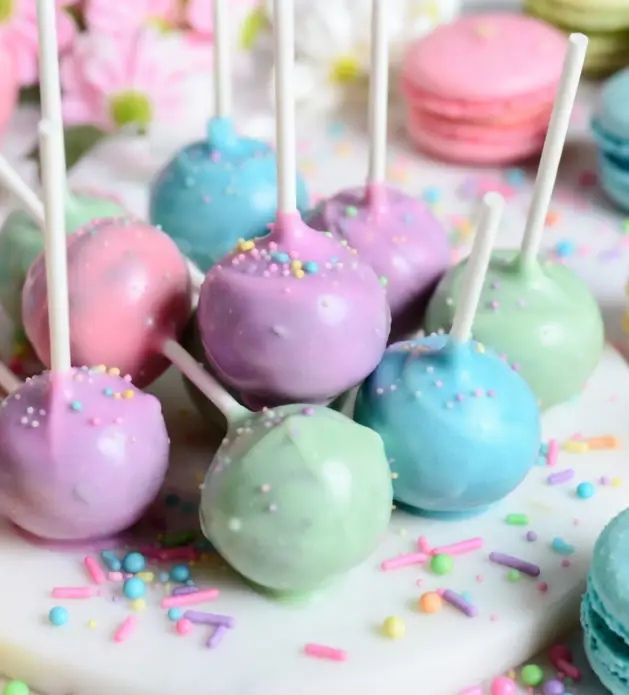
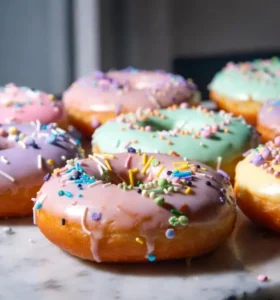
Your cake pops with pink lemonade frosting end up turning brown when you pull them out of the oven. Your lavender macarons turn brown even after only 12 minutes in the oven at 325 degrees Fahrenheit. The sprinkles on your spring-themed products turn out nothing like they did in your product photographs. Ring a bell? Color degradation in baked goods actually hurts companies. Find out how pastel colors degrade in the heat and what to do about it.
Why Pastel Colors Are Hard to Protect
Pastel colors have been designed to be light, soft, and delicate in appearance. This very characteristic makes pastel colors susceptible to damage. Low pigment density—meaning only a thin layer of color on top of a white base—is required to create pastel colors.
Most powdered colors can be produced through either synthetic color pigments or natural color pigments. The former are known to maintain the intensity of their colors even when exposed to high temperatures. However, today’s consumers prefer clear labeling on food items, meaning food producers are moving toward natural color sources such as beet juice powder, spirulina, turmeric, and fruits.
The following challenge is posed by the nature of the problem. Natural colors are organic substances that are broken apart under heat. Water helps them move freely. An acidic or basic condition changes the chemical composition of a molecule. What follows next is fading, shifting, or bleeding of color in products.
Consumer appetite for food coloring that is natural is rising at an impressive rate of double-digit increases every year, despite the instability of the natural colors being the number one technological challenge confronting manufacturers.
The Four Enemies of Pastel Sprinkle Color
- Heat
Ovens set at a temperature of more than 300°F begin to destroy natural food colors quickly. Anthocyanins, which are responsible for the colors red, blue, and purple in plants, are particularly prone to degradation. Anthocyanins subjected to 350°F will suffer up to a 40% loss in brightness within 15 minutes. Even though carotenoids are resistant to heat, they still oxidize in high temperatures.
- Moisture and Humidity
Water acts as a medium. As the moisture passes through the sugar shell or coating of the sprinkle, it takes along the dye particles with it. It is this process that leads to the leakage of color from the sprinkles to the icing or batter. In the same manner, high humidity before baking triggers the problem.
- pH Levels in the Product Formula
Natural coloring may change colors depending on its reaction to pH levels. The coloring extracted from the butterfly pea flower becomes pink when exposed to acid, while the red beet coloring becomes yellowish brown when exposed to alkalinity. When you have ingredients like baking soda, lemon juice, or vinegar in your product formula, the colors will change.
- Light Exposure
Both UV and visible light cause photo-oxidation of natural colors. The phenomenon is particularly important when referring to retail display cases where fluorescent or LED lighting is present. A pastel spring candy left under strong light for 3-5 days will start showing signs of discoloration even before purchase.
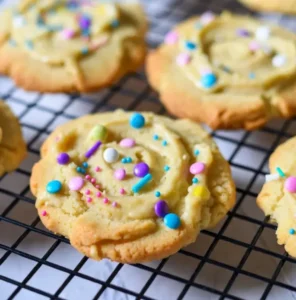
Engineering Stability: What the Technology Looks Like
Food science has developed real solutions to these problems. Here is what procurement managers and operations teams should look for when they evaluate a supplier of natural colored sprinkles.
- Encapsulation of the Colorant
The microencapsulation technology encloses every molecule of color within a protective barrier, typically derived from starch, maltodextrin, or similar materials. This helps delay the thermal degradation process of the coloring agent. Additionally, it also prevents the migration of moisture. Microencapsulated natural colors retain their color for 30 to 50 percent longer in baking conditions than regular natural colors.
- Sugar Shell Engineering on Natural Nonpareils
A natural nonpareil is a small sugar sphere coated in colored sugar crystals. The engineering of that outer shell is critical. Thicker shells delay moisture penetration. Harder sugar crystal structures resist bleeding. The ratio of binder to colorant in the shell formula also controls how the color disperses when heat is applied. Suppliers who invest in this engineering produce sprinkles that stay visually stable even at 375°F for 18–22 minutes.
- pH Buffering in the Coating System
Some suppliers add pH-buffering compounds to the sprinkle coating itself. This stabilizes the local environment around the pigment, so even if your batter is acidic or alkaline, the color in the sprinkle stays protected. This is a more advanced solution, and not every supplier offers it. It matters most when you are using anthocyanin-based pastels in a formula with significant pH activity.
- Antioxidant Co-Ingredients
The oxidation process plays an important role in causing the colors to fade. In some cases, companies use antioxidants such as rosemary extract, mixed tocopherols, and ascorbic acid. The antioxidants fight off the oxygen and hinder the degradation process, which causes fading. This method is effective for products that are stored for a long time on the shelf.
What Procurement Managers Should Ask Suppliers
Not all suppliers who sell “natural” or “all natural sprinkles” use the same stability technology. When you evaluate vendors, ask these direct questions:
- What temperature range are your natural colored sprinkles tested at, and for how long? A supplier who cannot provide a specific temperature and time window has not conducted application testing.
- Do you use encapsulated colorants or unprotected natural pigments? The difference in performance is significant, especially above 325°F.
- What is the pH stability range of your color systems? If your formula is acidic or alkaline, you need this answer before you commit to volume.
- Can you provide color stability data over a 6–12 month shelf period? Color that holds in the oven but fades in the display case is still a problem.
- Do you offer application-specific testing? The best suppliers will test their sprinkles in your actual formula or a close simulation—not just in water or controlled lab conditions.
The FDA’s guidance on food color regulations also provides a useful baseline for understanding which natural color sources are approved and how they must be labeled. Procurement teams should verify that any natural colorant used in their sprinkle supplier’s products falls within approved categories, especially for export markets with stricter color additive rules.
How Application Method Affects Color Stability
The same sprinkle behaves differently depending on how and when it is applied. This matters at the production line level.
- Pre-bake vs. post-bake application. Pre-baking sprinkles endure all the heat from the oven. Post-baking sprinkles, those that are used as toppings on frosted products, do not. If you want to use an in-oven sprinkle, you have to use one specially designed for that purpose. For post-baked sprinkles, however, there are more natural colorants that can be used.
- Moisture content of the substrate. The application of natural sprinkles on a wet glaze, fresh buttercream, or high-moisture ganache hastens color transfer. Should bleeding be your concern, then perhaps you should look into the substrate rather than the sprinkle. There are some production teams that apply a dry sugar dusting layer between the wet layer and the sprinkle.
- Humidity in the production environment. When your facility is operating under high humidity conditions for spring production, where pastels are at their highest, the moisture will induce color migration prior to even assembling the product. Environmental control is an effective, inexpensive approach that most organizations neglect when decorating.
The American Institute of Baking (AIB) offers technical assistance in terms of how ingredients’ shelf lives should be tested and what to consider to determine ingredient stability.
The Cost Case for Color Stability Investment
The CFOs will fight any premium for special ingredients such as stabilized natural sprinkles. This type of math works in most cases when considering total cost rather than unit cost.
The color failure in the spring candy lines will lead to different costs, such as labor for formulation, scrap production, repacking due to the label claim mismatch, customer service cost to handle complaints and returns, and loss of reorder opportunities by retail customers pulling out SKUs for poor shelf appearance.
An expensive sprinkle costing an extra 15% to 20% per pound but reducing one reformulation cycle costing you between $8,000-$25,000 in labor and process downtime, makes complete business sense. You can make the ROI case yourself easily if you know your costs from past formulations.
Doing a stability test before going big with production is always wise. Make sure the supplier provides sample sizes equivalent to your production size. Coloring results can be different on a test run of 10 pounds and an actual production batch of 500 pounds due to temperature uniformity and coating distribution.
Sourcing Natural Sprinkles That Actually Perform
There has been rapid growth in the natural sprinkle category. Today, there are more providers of natural, clean-label, or plant-based products. However, just because something is labeled as such doesn’t mean that it will work. It must be tested within your production environment.
When you source all-natural sprinkles for spring lines, look for suppliers who:
- Document their colorant source and processing method in a technical data sheet
- Provide third-party validated shelf-life and color stability data
- Have experience with high-heat applications above 325°F
- Offer custom color matching for branded pastel shades
- Can support volume scaling without quality variance
Food Grid Inc. sources and supplies food ingredients and decorative components designed for commercial food manufacturing.
The Bottom Line
Color stability in pastels in baked products is an engineering challenge with known answers. Microencapsulation, shell engineering, pH balancing, and antioxidants are just some of the options available. The problem tends to be one of difference between those who utilize the science and those who don’t. Purchasing departments that know the correct questions to ask, the necessary data, and are willing to do large-scale testing will sidestep all future color disasters in the spring.
It need not be a challenge to create stable, naturally colored sprinkles and natural nonpareils. When engineered for it, they will keep their pastel colors after high heat exposure, humidity, and even bright lights in the retail store environment. It is available now. Just find a supplier capable of providing it.
Ready to Review Our Natural Sprinkles for Your Spring Line?
Food Grid Inc. is proud to serve procurement managers and production operators from commercial food companies who require dependable, stable, and label-friendly decorative products. We provide natural sprinkles and nonpareils that have been proven to withstand high temperatures and deliver uniform colors.
Get in touch with one of our product specialists today for your sample request or consultation. Let us know your target temperature, production method, and volume—and we will suggest the ideal product for your needs.