




Your summer launch window is not in June. It is right now.
By the time your team finalizes summer SKUs and sends a sourcing request in late May or early June, the best options are already allocated. Lead times extend. Specialty items — clean-label sprinkles, allergen-conscious confectionery coatings, natural sanding sugar — go on backorder. And your summer product line gets built around what is left, not what you actually wanted.
This post is for food developers, R&D directors, brand managers, procurement leads, and distributors who are building summer seasonal programs. Here is why May is your only real window — and exactly what to lock in before it closes.
Why May? The Production Cycle Explained
The Real Sourcing Window Closes Before Most Teams Even Start
Manufacturing schedules are built months in advance. Summer production windows — June, July, and August — start filling up in March and April. By late May, specialty runs for items like naturally colored sprinkles and custom seasonal blends are nearly fully allocated.
May is the last open window. It is the point where you can still confirm lot sizes, request samples, review certificates of analysis, and get your PO placed in time for summer shelf dates.
After May:
- Lead times stretch from weeks to months
- Minimum order quantities increase as manufacturers consolidate production runs
- Limited-run seasonal blends and color-specific SKUs sell out entirely
- Rush charges and expedited freight cut into margins
According to Food Navigator USA, consumer demand for naturally colored and clean-label confectionery ingredients has grown consistently year over year. That demand puts direct pressure on specialty manufacturing capacity — and makes early procurement the only reliable strategy.
What Summer Buyers Are Actually Sourcing
Summer Success Is Decided Before Production Even Begins
Summer programs span a wide range of occasions: Fourth of July-themed baked goods, graduation cakes, wedding favor packaging, and beach-themed dessert bars. Consumers want color and festivity — but they also expect the label to hold up.
That means summer sourcing requests are increasingly centered on:
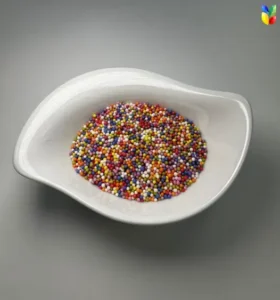
- Natural sprinkles made with plant and vegetable-derived colors — no synthetic dyes
- Allergen-conscious sprinkles are free from the top 8 allergens with dedicated manufacturing documentation
- Natural sanding sugar in vibrant summer shades for finishing and texture
- Decorative baking sugar in seasonal blends, including limited annual runs
- Natural food coloring sugar for custom or branded color stories
FoodGrid’s SweetGrid line is built specifically for buyers in this space. Every product in the decorative ingredient range is formulated with natural color sources — annatto, spirulina, turmeric, beta-carotene, and vegetable juice extracts — and carries the certifications procurement and R&D teams need to move fast.

FoodGrid SweetGrid: What Your Documentation Checklist Looks Like
For procurement teams and R&D directors working with retail buyers, co-manufacturers, or institutional food service accounts, the documentation behind an ingredient matters as much as the ingredient itself. Here is what FoodGrid’s SweetGrid natural sprinkles carry:
- NON-GMO Project Verified — verified supply chain from input to finished product
- Kosher certified — relevant for retail, institutional, and specialty food service accounts
- Vegan and vegetarian suitable — no animal-derived processing aids
- Top-8 allergen-free — soy-free, nut-free, dairy-free, gluten-free declarations available
- RSPO mass balance on palm oil — for sustainability directors and ESG-aligned sourcing programs
- Certificate of Analysis (COA) availability — on request, not delayed
If your retail buyer, co-man, or food service operator requires any of these declarations, FoodGrid has them ready. You are not waiting three days after you ask.
The Risk of Waiting: Four Specific Consequences
- Lead times get longer
Naturally colored ingredients require sourced plant extracts, batch testing, and scheduled production runs. There is no quick-turn option on a custom seasonal blend. Orders placed late wait in queue.
- MOQs increase
When capacity tightens, manufacturers consolidate. Smaller orders placed late often have to meet higher minimums because they are being added to partial runs — not their own.
- Costs go up
Rush processing, expedited freight, and higher spot-market sourcing costs all reduce margin. A summer launch that looked profitable in Q1 planning can underperform by July if ingredient sourcing runs late.
- SKU options narrow
FoodGrid’s SweetGrid seasonal sprinkle blends — including limited summer runs for Fourth of July, beach themes, and graduation palettes — are produced once annually. When the allocation is gone, it is gone until next year. Waiting means working with whatever remains.
Clean-Label Demand Is Tightening Supply
Clean-label bakery decoratives are no longer a niche category. They are the baseline expectation for a growing share of retail, private label, and institutional food service programs.
The USDA Economic Research Service has documented that consumers are making purchase decisions based on label transparency at higher rates than at any prior point. Retail buyers are translating that consumer demand into supplier requirements — and private label programs are now routinely asking for no-artificial-color declarations before a product can be reviewed for listing.
That means the pool of B2B confectionery ingredient suppliers who can actually meet clean-label requirements at a commercial scale is small. FoodGrid operates in that pool. But even within that pool, capacity is finite — and summer fills it.
What to Lock In Before June: Your Procurement Checklist
Before the end of May, your team should confirm the following with your ingredient supplier:
Natural and Clean-Label Sprinkles
- Color options available for summer seasonal programs
- Lot sizes and pack configurations (FoodGrid SweetGrid available in 10 lb, 25 lb, and 50 lb)
- Allergen declarations and dedicated manufacturing line documentation
- Non-GMO verification status and COA availability
Natural Sanding Sugar
- Granule sizes and available summer shades
- Volume minimums for June–August delivery windows
Decorative Baking Sugar
- Seasonal blend availability — confirm whether limited runs are still open
- Custom color story options if applicable to your brand program
Allergen-Conscious Sprinkles
- Top-8 free declarations
- Kosher and vegan certification documentation
- RSPO documentation if required by your ESG program
Do not wait for your retailer or co-manufacturer to flag a shortage. By the time that happens, your best options are already allocated elsewhere.
For Distributors: What Your Bakery and Food Service Accounts Will Ask For
If you are sourcing on behalf of bakery customers or food service operators, the summer conversation is already happening on their end. The accounts that are planning ahead are asking for:
- Clean-label sprinkles with no artificial dyes — specifically for products targeting label-conscious consumers
- Allergen-free decorative options for accounts serving allergy-sensitive markets
- Verified documentation packages — NON-GMO, Kosher, allergen-free — that they can pass through to their own buyers
FoodGrid’s SweetGrid line is designed to let distributors answer those questions with a single supplier. The certifications are in place. The documentation is available on request. The pack sizes — 10 lb, 25 lb, and 50 lb — fit both independent bakery volumes and larger food service programs.
Act in May
The brands and distributors that consistently hit summer shelf space on time share one practice: they place ingredient orders in May, not June. They confirm documentation before the production window closes. They work with suppliers who have certifications ready, not pending.
FoodGrid’s SweetGrid natural sprinkles, allergen-conscious sprinkles, natural sanding sugar, and decorative baking sugar are available now. Lot sizes are open. Documentation is ready.
Contact FoodGrid at info@foodgridinc.com to confirm availability, request samples, or discuss your summer program requirements before the May window closes.
Visit foodgridinc.com to review the full SweetGrid decorative ingredient range.
Sources: Food Navigator USA — Consumer demand for naturally colored confectionery ingredients. USDA Economic Research Service — Consumer label transparency purchasing trends. FDA — Growing interest in food colorant sourcing and natural color standards.