



Consumers are no longer choosing between health and happiness. They want both – and they are willing to spend more on a product that provides both benefits. Your bakery or snack brand cannot afford to overlook the opportunities associated with mindful indulgence. The market for clean labeling visual solutions exists, and it is exploding in size. The companies that will benefit most from the trend are the ones that act now.
In this blog, we discuss the market opportunity, formulation requirements, and product strategy considerations.
The Mindful Indulgence Shift Is Real — and It Has Numbers Behind It
Consumers in 2026 are not quitting dessert. They are upgrading it.
According to Taste Tomorrow’s global survey, 63% of consumers now prefer smaller portions of higher-quality treats rather than sacrifice on flavor. They want their food to taste delicious, but also make them feel good about eating it. It also has to look good, too. In one sentence, this trend can be explained as such.
This shift shows up at the market level, too. The global natural food colors market was valued at $2.01 billion in 2025 and is projected to nearly double to $4.03 billion by 2035, growing at a CAGR of 7.8%. The growth is attributed to three factors, namely the need for natural products from consumers, government strictness concerning synthetic dyes, and finally, the increasing trend towards high-quality foods.
For snack and dessert manufacturers, bakery R&D teams, and QA specialists, this is not a trend to monitor. It is a specification change to plan for.
Why Pastel Colors Are the Visual Language of Mindful Indulgence
Color is the very first impression a customer gets. Before reading any labels, smelling anything, or tasting the food, he or she will see the colors.
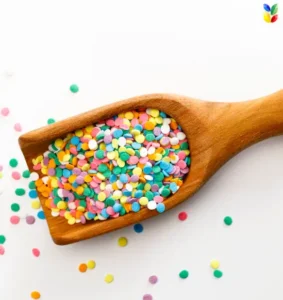
The pastel shades convey gentleness, relaxation, and sophistication. They speak of “refinement” and “thoughtfulness” rather than loudness and artificiality. And the consumers who indulge themselves mindfully are those who will respond to the visuals. Tastewise data shows that top consumer motivations in 2026 bakery and dessert purchases include indulgence, comfort, warmth, and craftsmanship. Pastels, whether decorated with nonpareils that are natural or sprinkles in dusty lavender, soft sage, and pastel pink hues, communicate all four signals simultaneously.
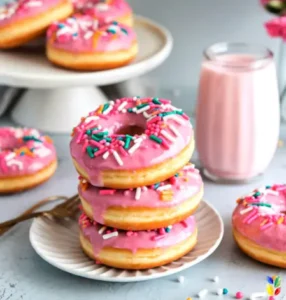
From a product developer’s perspective, this creates an easy win-win situation. It does not require you to redesign your entire SKU. You have to change the decoration process. If you use artificial blue nonpareils on your cupcake, you create a kids’ product. If you use natural sprinkles in a soft blue and cream color, then you create an artisan product. Same base SKU but different price, different placement, different buyer.
This difference is where the margin comes from.
The Clean-Label Imperative Is Now a Regulatory One
The pressure to move away from synthetic dyes is no longer just a marketing preference. It is becoming a compliance issue.
The FDA has accelerated the phase-out of FD&C Red No. 3, pushing the deadline ahead of its previously set 2027-2028 target. Red Dye 3 was a staple in maraschino cherries, cereals, sprinkles, and children’s sweets and now companies that rely on this ingredient require a plan for substitution. Delays in implementing this will only add to the confusion and force them to hurriedly change their formulations, risking product quality.
Not only Red 3, but the entire trend for the regulation of artificial colorings in food products has been going this way. Several countries in Europe have already outlawed or severely restricted the use of some synthetic colorings. In 2024, over 65% of food and beverage launches globally contained natural colorants — a signal that the industry is already moving even without mandates.
Natural food color stability must therefore be an essential requirement for QA professionals rather than just an added bonus. On the other hand, for R&D teams, the choices that you make today will dictate how compliant you are going to be in the next three to five years.
The Technical Problem: Heat-Stable Food Colors Are Hard to Get Right
Below is the area that distinguishes between successful R&D departments and those that squander their budgets on failed experiments.
Natural colors cannot be substituted for artificial colors since they react differently to temperature, light, and pH levels. Not all natural colors hold up to heat as well as formulators would like — especially when combined with browning, they often do not turn out bright and vibrant, according to application scientists at IFPC.
The heat-stability challenge is specific to each pigment source:
- Beet-derived colors give excellent pink and red tones in low-heat applications, but they brown under high oven temperatures.
- Anthocyanins from fruits and vegetables deliver rich reds and purples — but only in pH systems of 4 or below, making them unsuitable for most bakery doughs.
- Turmeric holds up well to heat but fades under light exposure, which is a problem for clear-window packaging.
- Spirulina extract — used for blues and greens — is not stable in acidic or high-heat environments in standard form.
That is why the term “stability of natural food colors” cannot simply be used for marketing purposes. It is a formula requirement that needs to be proven in your actual production process, at your actual baking temperature, and in your specific pH system.
The great thing about it: the industry has found ways to solve this challenge. Encapsulation ensures that natural colors withstand the effects of heating processes. Beet systems that have been stabilized can provide heat resistance that natural beet juice does not offer. Over 50 patents were filed in 2023 alone related to encapsulation and emulsification of natural colorants, which tells you how fast the technical solutions are advancing.
R&D and quality assurance (QA) specialists must understand that there is no universal approach to using natural colors. It is critical to choose the right pigment system based on the characteristics of your process – and your vendor should have experience with bakery and snacks production.
Natural Nonpareils and Clean-Label Sprinkles: Where ROI Gets Specific
Decorations are one area of high leverage since they lie right on the intersection of aesthetics, clean label, and premium pricing.
An item that is decked out with natural nonpareils in pastel colors could actually be priced in the premium category. Not only does it take great pictures for online sales, but it is also clean-label friendly. Plus, it resonates aesthetically with mindful indulgence consumers without any need for base formulation changes.
That is a strong ROI case on multiple fronts:
- Margin expansion. Premium decoration justifies a higher retail price. The same weight of product in a cleaner, more aesthetic presentation captures a different buyer at a different price point.
- Compliance readiness. Transitioning to clean-label sprinkles now means you are not scrambling to reformulate when the next synthetic dye faces regulatory pressure.
- Shelf and digital performance. Products in soft pastel palettes consistently outperform loud, neon-colored products in premium and better-for-you channels — both on shelf and in social media content. Visual appeal drives impulse purchase and shareability.
- Brand positioning. Clean-label sprinkles signal craft and intentionality. That signal builds brand equity over time in a way that synthetic decoration cannot replicate.
When it comes to bakery R&D, the formulation route is simpler compared to the base color route. Clean-label sprinkles are usually applied after baking or as a coating, eliminating the need for heat stability. This gives you a clean label, visual effect, and ease of production.
Where to Start: A Practical R&D Roadmap
If your team is ready to move on to this, here is a practical sequence:
Step 1: Identify the current ingredients used in your decorations and their associated risks. Which of your current sprinkle, nonpareil or color coating ingredients contain artificial dyes? Which of your SKUs are most at risk due to Red 3 exposure?
Step 2: Prioritize your SKU selection based on value and regulatory risk. Your highest velocity products in premium or better-for-you SKUs have the most to benefit from switching to natural colors.
Step 3: Establish specifications for the performance of your natural food color in terms of stability. What does stable mean for you, and how do you measure it in bake times and temperature ranges? Have your stability requirements in place before you consider suppliers.
Step 4: Sample from your supplier and conduct a matched trial. How do your current artificially colored products compare to the natural color-coated alternatives? Take pictures under production and retail lighting. Evaluate how long your product can stay on shelves and retain its color.
Step 5: Confirm your clean label claim. Make sure that you and your supplier agree that your colorants comply with your clean label standard of definition, whether it be “no artificial colors,” plant-based, or non-GMOs.
Food Grid Inc. source of natural nonpareil and clean-label sprinkles, among others, that can be used in the process of manufacturing snacks and bakery products. The range of products they offer is meant to facilitate a complete switch from artificial color to a natural color system.
The Business Case in Summary
Mindful indulgence is not an off-the-radar market trend. Rather, it’s the path that the luxury food category is taking through all key distribution platforms. People want items that are visually stunning, delicious, and do not compromise their personal values. The use of pastel designs and natural decorations is the most straightforward response to this consumer demand.
The ROI is real:
- Premium price positioning through clean visual signals
- Compliance readiness ahead of regulatory deadlines
- Shelf and digital performance in premium channels
- Brand equity built on ingredient transparency
These technical difficulties associated with natural food coloring stability can be overcome; in fact, developments in this area are occurring very rapidly indeed. Those who embrace this technology will have a clear competitive edge compared to those who do not.
Ready to Reformulate for the Mindful Indulgence Market?
Reach out to our specialist for any questions or request a sample.
Explore the ingredient selection at FoodGrid and formulate your clean-label decoration system today.