



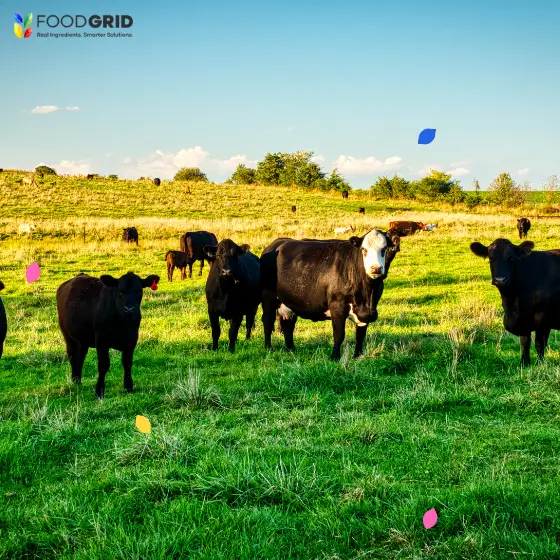
Your fall freshening group is moving into the close-up pen now. These cows dealt with heat stress through July and August. Their body condition scores are lower than a spring cow’s. Their rumens have been suppressed for months, and they cannot mobilize calcium effectively at calving. What you do with their ration in the next three weeks determines whether they calve clean and peak strongly or whether you face a metabolic disease outbreak in October.
Seventy to eighty percent of your annual veterinary bills happen in the first three weeks after calving. You make that decision in September by getting the close-up ration right.
This post is for farm managers, procurement officers, and CFOs who control the feed budget and want to know what it costs to do the close-up ration right and what it saves.
Why a Heat-Stressed Cow Is a Different Close-Up Challenge
A spring-freshening cow enters the close-up pen after a dry period in mild or thermoneutral conditions. Her dry matter intake has been stable. Her body condition is adequate. Her rumen runs at normal efficiency. She is a manageable transition risk.
A fall-freshening cow that spent July and August under sustained heat stress is a different animal. She enters the close-up pen with up to half a unit less body condition score than she should have. Her rumen microbiome has been under heat stress pressure for months, which means fermentation efficiency and feed digestibility are below baseline. Her immune function is reduced from the metabolic demands of summer. She starts the most demanding 21-day period of her lactation cycle already behind.
Penn State Extension notes that the transition period from three weeks before calving to three weeks after calving is the most critical nutritional window in a dairy cow’s production cycle. Cows that do not receive adequate nutritional support during this period peak lower, cycle back later, and have higher rates of metabolic disease in early lactation. For a heat-stressed cow entering the close-up pen in September, that risk compounds everything the summer took from her.
The Calcium Mobilization Problem at the Center of Fall Transition
The most acute metabolic risk for a fall-freshening dairy cow is subclinical hypocalcemia. Most producers associate milk fever with obvious clinical signs. The more expensive problem is the subclinical version. It shows no visible signs but suppresses immune function, reduces dry matter intake at freshening, and raises the risk of every other transition disease.
Cornell University College of Veterinary Medicine research estimates that 25 to 50 percent of multiparous cows experience subclinical hypocalcemia at calving, even on well-managed dairies. For a herd freshening in October after a heat-stressed summer, that number runs higher. The cow’s parathyroid response to the sudden calcium demand of colostrum and early milk production depends on her metabolic readiness going into the close-up period. A depleted, heat-stressed cow is less prepared.
The close-up ration sets the cow up to mobilize calcium efficiently. Get it right, and she calves clean, eats well in the first week, and transitions into peak production on schedule. Get it wrong and she goes into negative energy balance faster, her immune system fails, and she becomes a ketosis, mastitis, or displaced abomasum case in October. Each of those events costs $300 to $500 in treatment and lost production on top of the September ration cost you were trying to avoid.
What the Close-Up Ration Needs to Do in September
The close-up ration is not a lactating cow ration. It is not a far-off dry cow ration. It is a targeted nutritional program designed to prepare the cow’s metabolic systems for calving and the early lactation period that follows.
The September close-up ration for a heat-stressed fall-freshening class needs to do four things. It needs to support dry matter intake in a cow that has been eating below normal for two months. It needs to prepare calcium mobilization systems for the demand spike at calving. It needs to provide rumen-bypass energy that does not add heat load or acid challenge to a rumen still recovering from summer suppression. And it needs to do all of this in the last 21 days before the cow’s metabolic demands increase dramatically.
Calcium salt of fatty acids addresses the energy and rumen health components at the same time. It provides rumen-inert energy that bypasses the compromised rumen and is absorbed directly in the small intestine. For a heat-stressed cow entering the close-up pen with below-normal energy reserves, this is the fastest way to raise dietary energy density without adding digestive challenge. FoodGrid’s CAL+ calcium salt is formulated for this application. The calcium bonds with fatty acids, protecting the fat from rumen bacteria and delivering clean energy to the small intestine where the cow absorbs it efficiently.
A high-C16 palmitic acid supplement sets the cow up for stronger early lactation by ensuring the mammary gland has an adequate C16 fatty acid supply from day one of milk production. For a fall-freshening cow that needs to rebuild butterfat percentage after a summer of depression, starting the new lactation with adequate C16 in the ration shortens the recovery window and protects the early checks. FoodGrid’s P85+ palmitic acid runs at 80 percent or higher C16 concentration for maximum mammary gland delivery.
The Three Weeks That Decide Your Entire Fall Lactation
Most dairy managers focus on the calving event itself. The 21-day close-up period before calving is where the outcome of that event is determined.
University of Wisconsin Extension research shows that cows receiving properly managed close-up nutrition peak 10 pounds of milk higher per day and produce an additional 2,500 pounds of milk over the lactation compared to cows on inadequate close-up programs.
For a 500-cow herd with 125 fall-freshening cows, a 10-pound-per-day peak milk advantage across the fall lactation is worth tens of thousands of dollars in milk revenue. The close-up ration cost that protects that advantage is a fraction of the revenue it protects. The operations that invest in September close-up nutrition see it on their December and January milk checks. The ones that cut the close-up ration see it on their October veterinary bills first.
The financial model is straightforward. A case of clinical ketosis costs $300 to $400. A displaced abomasum costs $500 to $800 including surgery, milk loss, and reduced reproductive performance. A missed first-service conception costs $4 to $6 per day open for every day the cow cycles back. Multiply each of those costs across the percentage of your fall class that develops each condition without proper close-up nutrition. The supplement cost is small by comparison.

What to Include in the September Close-Up Ration
These are starting points for a close-up ration designed for heat-stressed fall-freshening cows. Your nutritionist should adjust based on your forage analysis, herd BCS distribution, and milk yield targets.
Calcium salt of fatty acids: 100 to 150 grams per cow per day in the close-up period. Provides rumen-bypass energy to support dry matter intake and energy balance without acidosis risk in the pre-fresh rumen.
High-C16 palmitic acid: 75 to 100 grams per cow per day in the close-up period. Prepares the mammary gland for strong early lactation butterfat production from day one post-fresh.
Dietary energy density: Raise energy density in the close-up TMR relative to the far-off ration. The cow’s dry matter intake drops in the last week before calving. Every pound of feed she eats needs to deliver more energy.
Transition to post-fresh ration: Move the close-up cow to the lactating ration immediately at freshening. Delay adds negative energy balance days. CAL+ and P85+ carry through at lactating inclusion rates from day one.
Bunk space: 30 inches per cow minimum with headlocks, 36 inches without. Inadequate bunk space in the close-up pen reduces dry matter intake at exactly the wrong time. This is a management variable that costs nothing to fix.
The Records to Pull Before You Set the September Close-Up Ration
Before you finalize the close-up ration for your September entry cows, pull these four records from your summer herd data. They show how hard the heat stress hit and how much additional nutritional support your fall class needs.
Body condition scores from August dry-off. Any cow below 3.0 at dry-off needs a close-up ration with higher energy density. Below 2.75 is a high-risk transition animal that warrants individual monitoring through freshening.
Summer conception rates. If your July and August breeding conception rates dropped more than 10 points from your spring rates, expect a higher percentage of your fall class to cycle back after first service. Energy balance support from CAL+ and P85+ reduces that risk in early lactation.
Milk weights from August. A herd that lost average daily milk through August enters fall lactation with a production deficit. The close-up ration needs to set those cows up for recovery, not just maintenance.
Previous fall freshening metabolic disease rates. Compare your October and November ketosis, milk fever, and DA rates from prior years to your spring freshening rates. The gap shows how much heat stress has historically cost your fall class at transition and sets your prevention target.
What FoodGrid Has in Stock for Your September Close-Up Pen
FoodGrid stocks and ships calcium salt of fatty acids and high-C16 palmitic acid supplement with full documentation and short lead times. Both are available for immediate order confirmation for September and October close-up pen programs.
CAL+ calcium salt of fatty acids is a rumen-inert bypass fat made from natural, non-GMO palm fatty acid distillate bonded with calcium. The calcium bond protects the fat from rumen bacteria and delivers clean energy directly to the small intestine for efficient absorption. It supports milk production, energy balance, and metabolic stability in the transition cow without disrupting rumen health. Manufactured under GMP standards with ISO 14001 and ISO 22000 certification.
P85+ high-C16 palmitic acid supplement is made from pure, non-GMO palm oil and contains 80 percent or higher C16. It targets milk fat production from day one of the new lactation, improves feed conversion ratio, and supports energy balance through the early lactation negative energy balance period. Shelf life is 12 months. Store below 110 degrees Fahrenheit in dry conditions.
Both products ship with COA, fatty acid profile, allergen statement, inclusion guidelines, and safety data sheet ready before first delivery. New customers receive $200 off their first order across all dairy feed supplement categories.
Talk to Our Dairy Nutrition Team This Week
Your fall freshening class is in the close-up pen now. The ration decisions you make this month affect your October vet invoices and your December milk revenue. There is no going back on the three weeks before calving.
FoodGrid carries CAL+ and P85+ in stock for immediate shipment. Full product documentation is available at onboarding, and free samples are available for your nutritionist to test inclusion levels before you commit to close-up pen volumes.
Request a sample or connect with our feed ingredient team at foodgridinc.com.
Real Ingredients. Smarter Solutions.