



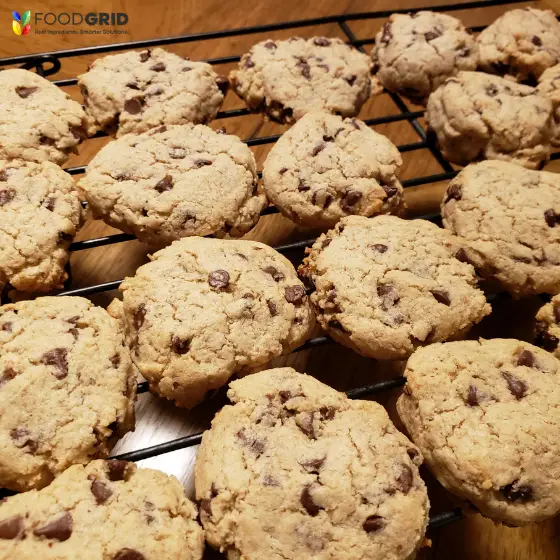
There is one key component that you will find in your cookies, your crusts, your icings, and your dough products. This is the critical factor that can change all of them at once. This is the strength and the weakness of going all-purpose shortening.
Procurement teams tend to view shortenings as simple ingredients. Research and development teams see them differently. They understand that the proper shortening determines texture and consistency in a whole line of products. The improper choice results in inconsistencies that surface months later in consumer complaints. Here is what you should check on your shortening list, whether you’re sourcing for a U.S. plant, a Canadian one, or both.
Why One Fat Choice Affects So Many Products
Most bakery and food processors will not have a separate fat for every product that goes out their door. Instead, an all-purpose shortening will be used in cookies, biscuits, pie crusts, cake batters, and frying batter. This is precisely the reason that the selection becomes very important. A shortening that is incompatible with a specific recipe in terms of its solid fat index will not only mess up the recipe itself, but all recipes based on the former.
It is for this reason that changing a supplier or shortening type in the middle of a year can carry more risks than what is apparent from the paperwork itself.
Shortening Versus Lard: Why Manufacturers Moved Away
Older bakery formulas relied on lard for flakiness and rich flavor. Modern commercial bakeries mostly moved away from it, and the reasons go beyond taste preference.
Lard performance varies more than a formulated shortening does, since it comes from an animal fat source with natural batch-to-batch variation. It also carries dietary and religious restrictions that shortening does not, which limits which markets a lard-based product can enter. A shortening versus lard comparison almost always comes down to control. Shortening gives a manufacturer a documented, repeatable fat profile every time, which is what high-volume production actually requires.
What Is a High Ratio Shortening, and Why It Matters for Cake Formulas
Cake bakers ask what a high ratio shortening is more often than any other formulation question in this category. The answer is simple. A high ratio shortening is formulated to hold a higher percentage of sugar and liquid in a batter than a standard shortening can support, without the batter separating or the finished cake collapsing.
This matters directly for texture. Cakes built on high ratio shortening hold moisture better and produce a finer, more even crumb. Standard shortening works fine for pie crusts and biscuits, where flakiness matters more than moisture retention. High ratio shortening is built for the opposite goal: a soft, tender crumb structure in cakes, cupcakes, and sweet baked goods with a high sugar content.
Confirming which type your formula needs, standard or high ratio, is one of the simplest ways to fix an inconsistent texture problem before it becomes a customer complaint.
Palm Shortening and Palm Fruit Shortening: What Buyers Should Know
Palm shortening and palm fruit shortening dominate the trans fat free category for a clear reason. Palm oil naturally contains a higher proportion of saturated fat than most other vegetable oils, which gives it a solid, workable texture at room temperature without needing hydrogenation.
This matters because hydrogenation is the process that historically created trans fats in shortening. The FDA’s 2015 determination that partially hydrogenated oils are no longer “generally recognized as safe” pushed most U.S. manufacturers toward palm-based and other naturally solid fat sources instead (FDA). Canadian manufacturers moved even further: since September 2018, adding partially hydrogenated oils to any food sold in Canada, including shortenings and margarines specifically, has been outright illegal, not just discouraged (Health Canada, 2018).
For procurement teams sourcing across both markets, this means palm fruit shortening isn’t just a clean label choice. It’s often the most functional and cost-stable option in the trans fat-free category, since it doesn’t require the same reformulation scrutiny that a supplier relying on other fat sources might still be working through.
Trans Fat Free Shortening Is Now a Baseline Requirement, Not a Premium Feature
A decade ago, trans fat-free shortening was a differentiator. Today, it’s close to a minimum requirement across most retail and foodservice buyer contracts in both the U.S. and Canada.
This creates a real labeling risk worth knowing, and it looks different depending on which side of the border you’re selling into. Under current U.S. rules, a product can still claim “trans fat free” and list “0 g trans fat” if it contains less than 0.5 grams of trans fat per labeled serving (21 CFR 101.62). Procurement and QA teams sourcing shortening for a U.S. trans fat free product line should confirm the actual formulation, not just the label claim, since a supplier relying on this rounding rule can leave trace trans fats in a product marketed as free of them.
In Canada, this loophole doesn’t exist for the ingredient itself: added partially hydrogenated oils are banned outright in shortenings and margarines sold in Canada, regardless of what the label says (Health Canada, 2018). That’s a meaningful difference for a manufacturer running the same formula across both markets — a shortening that clears the U.S. labeling bar on a technicality won’t necessarily clear the Canadian regulatory bar on substance.
Texture and Flakiness: What Actually Controls These Two Traits
Texture and flakiness come down to how a shortening behaves at three stages: mixing, resting, and baking.
During mixing, shortening needs to coat flour particles evenly without overworking the gluten. This is what creates a tender crumb instead of a tough, dense one.
During resting, a good shortening holds its structure at refrigeration temperature without becoming too hard to work or too soft to hold shape. This affects how consistently your production team can portion and shape dough across a full shift.
During baking, the fat needs to melt at the right point to create separation between layers of dough, which is what produces flakiness in a pie crust or biscuit. Melt too early, and the layers collapse into a dense product. Melt too late, and the product bakes up greasy instead of flaky.
A shortening that performs well at all three stages gives your production line the same result on batch one and batch one thousand, which is the entire point of using a formulated shortening instead of a variable natural fat.

Consistency Across Product Lines Is a Supply Chain Issue, Not Just a Formulation One
R&D can build a perfect formula around a specific shortening. That formula only holds up if the supply stays consistent. This is where procurement and quality control teams need to stay closely connected with R&D, since a supplier switch that looks identical on paper can still shift solid fat content, melting point, or plasticity enough to change the finished product.
The pressure to keep formulas stable while scaling volume isn’t slowing down. Fats and shortenings held roughly a quarter (24.38%) of the global bakery ingredients market in 2025, and the overall bakery ingredients market is projected to grow from about $22.7 billion in 2026 to $30.2 billion by 2031, with North America, the U.S. and Canada specifically called out as leading markets in the region, accounting for a meaningful share of that demand (Mordor Intelligence). That kind of sustained volume growth makes supply consistency, not just initial formulation quality, one of the most important factors in choosing a shortening brand for the long term.
Shortening Performance in Frying Applications
Baking is not the only place shortening consistency matters. Fried products, from donuts to fried pies to savory snack items, depend just as heavily on a stable shortening with a predictable smoke point and oxidative stability.
A shortening that breaks down too fast under repeated frying cycles changes flavor, darkens color, and shortens the usable life of your frying oil, which raises cost and lowers product quality at the same time. Palm-based shortenings tend to perform well here, since their naturally higher saturated fat content gives them more stability under sustained heat compared to fats built from more unsaturated oils. Confirm smoke point and oxidative stability data from any supplier before approving a shortening for a frying application, not just a baking one.
The Real Cost of Switching Shortening Brand Without a Full Comparison
Procurement teams sometimes switch shortening brands based on price alone, assuming that two products labeled as all-purpose shortening will behave the same way in production. This assumption causes more formulation problems than almost any other sourcing decision in a bakery or food manufacturing operation.
Two shortenings can carry an identical label description and still differ in solid fat index, plasticity range, and melting behavior. These differences may not show up in a quick taste test, but they surface fast on a high-speed production line, where consistent portioning, sheeting, and baking depend on the fat behaving the same way every single time. Before switching brands to capture a lower price, request side-by-side performance data, not just a spec sheet comparison, and run a small batch trial before committing to full volume.
What to Confirm Before Approving a Shortening Supplier
Before your team locks in a new shortening supplier or expands volume with a current one, confirm these points:
- Certificate of Analysis per batch, covering solid fat content, melting point, and moisture level
- Full trans fat disclosure, not just a per-serving label claim, and, if you sell into Canada, written confirmation that no partially hydrogenated oils are used at any stage, since the rounding-rule label claim common in the U.S. isn’t a defense under Canadian regulation
- Documented plasticity range, so your production team knows the safe working temperature window
- Source transparency, including whether the shortening is palm-based, palm fruit-based, or a different vegetable oil blend
- Non-GMO documentation, if your formula carries that claim
- Allergen statement, covering both the product and the facility where it is made
- Food safety certification, such as SQF or BRC, along with FDA facility registration for products entering U.S. retail or foodservice supply chains, or the appropriate CFIA-recognized registration for Canadian channels
- Confirmed bulk packaging formats, 50 lb cubes, drums, or totes, matched to how your production line actually receives and handles fat
A supplier who provides this documentation without delay saves your quality team real time, and protects your product line from an inconsistency that only shows up after the product ships.
Why This Decision Deserves More Attention Than a Line Item
Shortening doesn’t get quite the level of review that chocolate or flavoring gets, although it affects more products in your line than almost any other ingredient. Choosing a new source of shortening based solely on cost, without checking that the fat content and plasticity of the new shortening meet your requirements, is the number one way manufacturers wind up with an unreliable product across several SKUs simultaneously.
Choosing shortening on a cross-functional basis, considering the opinions of procurement, R&D, and QC, will help you protect your whole catalog, not just the particular product on your purchase order.
FoodGrid Supplies the Shortening Your Product Lines Depend On
Both FoodGrid’s All Purpose Shortening and All Purpose High Ratio Shortening have been designed with a consistent texture, dependable flakiness, and trans fat-free formulation for baking, blending, and frying uses across the U.S. and Canada, with no partially hydrogenated oils in the formulation, full stop, not just a label claim under the rounding rule.
The purchasing team works in conjunction with procurement and manufacturing departments to ensure consistency with increasing quantity. The quality control team ensures that each batch is fully documented, and you can be assured of full support by our research and development and quality assurance teams.
Request a Sample Before Your Next Formulation Run
Don’t allow the inconsistency of your shortening supply to ruin the texture of your product line. Shortening samples with complete documentation are sent along with your initial order by FoodGrid.
For a sample or to speak with our ingredient experts, contact FoodGrid Inc.
Real Ingredients. Smarter Solutions.