

A customer has identified three products that require reformulation. Operations teams need a clear reformulation strategy in place by next quarter. Meanwhile, CFOs are asking what reformulating under pressure will ultimately cost.
It is not a problem for the future. This is a July 2026 problem. The FDA is eliminating all petroleum-based synthetic colorants from US food systems by the end of this year. Over 25 states have already put in place or have introduced more stringent regulations. Each day you delay reformulating your products on artificial colors only adds to your costs and risks.
The Real Cost of Waiting
Forced reformulation is always more expensive than planned reformulation. Forced reformulation requires costly rush qualification of suppliers, rushed samples, reduced timeframes for trials, and rush label changes. In addition, if the retail customer removes your SKU before completing your process, you will lose the shelf space.
Red Dye No. 3 was banned by the FDA in January 2025. The FDA planned to ban Red 40, Yellow 5, Yellow 6, Blue 1, Blue 2, and Green 3 by the end of 2026. California banned the use of Red Dye No. 3 in all food products sold in the state as of early 2027. In West Virginia, a law was enacted to ban the use of seven artificial dyes in grocery stores from January 2028. Based on the FDA’s color additives webpage, the agency has approved two new natural color additives to facilitate the process: beetroot red and expanded spirulina extract, approved in February 2026.
Those operations teams who will incorporate the change into their Q3 and Q4 production cycles save money and time while protecting their retail relationships.
How This Affects Your Budget Line
The dual cost pressures facing procurement managers arise from the fact that natural ingredients used in food colorings are more variable than man-made dyes. Poor qualification of suppliers translates to variability on your manufacturing floor in the form of waste and rework. Secondly, the availability of constrained natural colors is already getting tight.
There is only one FDA-approved synthetic dye substitute that can be used for blue and green coloring: spirulina extract. By mid-2026, major companies like Nestle USA had phased out all artificial colors. By the end of 2026, Campbell’s would have phased out all artificial colors from its products. That means a lot of volume shifting to an undersized supply chain.
For yellows and oranges, the picture is easier. Beta-carotene, annatto, and paprika extracts are cost-competitive, widely available, and heat-stable for standard baking temperatures. Procurement teams in this hue range have the most room to negotiate on price and lead time right now.
For reds and pinks, beetroot red is the strongest FDA-approved new option. It is more stable in lower-pH applications than anthocyanin-based options and is gaining traction fast. Lock in your source now before Q4 demand peaks.
The Fastest SKUs to Fix
Not every SKU carries the same compliance risk. Start with the ones that do.
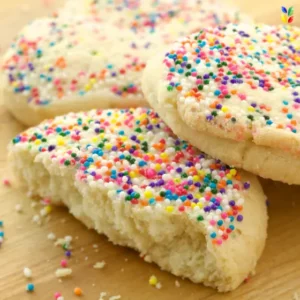
Decorated goods and seasonal lines are your lowest-risk and fastest fix. Cookies, pastries, and seasonal items that use natural sanding sugar, colored nonpareils, or naturally colored sprinkles as surface decoration need no base product reformulation. You swap the decorative ingredient. The application process stays the same. Existing equipment remains unchanged. Coverage rates deliver the same reliable performance. The only difference is the ingredient label.
FoodGrid’s natural colored nonpareils come in an 8-color blend and individual shades, all plant-derived with no FD&C dyes. Our natural sanding sugar and naturally colored sprinkles cover the full commercial color range using fruit and vegetable extracts. These are the clean-label bakery ingredients procurement teams can source and approve fastest because they are drop-in replacements, not reformulations.
Core products with Red 40 or Yellow 5 are your second priority. These two synthetic dyes appear across the widest range of categories and carry the highest combined compliance exposure. Audit every SKU that contains either. Flag the ones with the highest retail velocity and the shortest reformulation window. Start trial orders now.
Blue and green SKUs are your most urgent sourcing challenge. Spirulina supply is constrained and tightening. If you have SKUs in this color range, contact your food ingredient supplier today, not in Q4.
The Supplier Qualification Checklist
Natural colors for food manufacturing require tighter supplier qualification than synthetic dyes. Variability is higher. Documentation requirements from retail buyers are more detailed. Run this checklist before you approve any natural color supplier for commercial volume.
- Full colorant source disclosure. You need to know the plant, botanical, or mineral source for every pigment in the product.
- Color specification ranges. Ask for the documented acceptable variance per lot. Batch-to-batch consistency is where poor suppliers fail.
- Certificate of Analysis per batch. This should cover color, granulation, and purity. If a supplier cannot provide this on demand, move on.
- Written allergen statement. For the product and the facility. Required by most retail buyers before the first delivery.
- Country of origin documentation. Needed for retail compliance audits. Get it before you need it, not after.
- SQF, BRC, or equivalent food safety certification. And FDA facility registration for US retail supply chains.
FoodGrid delivers all of this documentation at onboarding. Visit our quality control page to see the full certification and documentation standard we maintain across our natural confectionery ingredients portfolio.
Plan Your Lead Times Now, Not in October
Natural food color alternatives experience the highest pressure from the supply chain in Q4. Every bakery and confectionery company under the same pressure will make their orders in the same period. Operations managers who set buffer stock requirements and decide when to place reorders in July do not have to experience many disruptions during Q4.
Buffer stock requirements should be calculated taking into account your production requirement in your peak season period, and not your average monthly consumption. In the case of decorative products, that peak season would be between August and November for most of the producers. If your lead time is six weeks and your supplier’s lead time is four weeks, your stock commitment has to be made by August at the latest.
Persistence Market Research predicts that the global market value for natural food colors is approximately USD 2.3 billion in 2026 and is growing at 7.4%. Demand growth is currently outpacing production scaling up for most constrained natural color groups. Procurement managers who start moving in Q3 have better conditions than those who start moving in Q4.
The Label Claim You Gain
There is a commercial upside to completing this transition early. The FDA issued enforcement discretion guidance in February 2026 that allows any product free of FD&C-certified dyes to carry a “Made without artificial food colors” claim on the front of the pack.
That claim matters in three specific channels. School nutrition programs are cutting products with synthetic dyes from approved vendor lists. Natural and specialty retail buyers are adding clean label requirements to new product submissions. Foodservice operators serving health-focused menus are updating their supplier standards. If your product carries the claim, you gain access. If it does not, you face a growing list of barriers.
The International Food Information Council tracks consumer label-reading behavior. Their research consistently shows that “no artificial colors” ranks among the top claims that influence purchase intent in the bakery and confectionery categories. Retail buyers know this. They are selecting products accordingly.
What FoodGrid Supplies
FoodGrid stocks and ships the full range of natural decorating sugars and natural confectionery ingredients needed for compliant reformulation in bakery and confectionery production.
- Natural colored nonpareils are available in an 8-color blend or individual shades. All plant-derived. No FD&C dyes. Direct drop-in for conventional nonpareils in icings, coatings, and decorated goods.
- Natural sanding sugar is available in a full color range using fruit and vegetable extracts. Heat-stable at standard baking temperatures. An identical application process to conventional sanding sugar.
- Naturally colored sprinkles cover the full commercial spectrum. Available in seasonal blends and individual colors. No process change required on your production line.
All products ship with full documentation. COA, allergen statement, colorant source disclosure, country of origin, and spec sheet are ready before your first order. New customers receive $200 off their first order across all categories.
Talk to Our Ingredient Team Today
In case you’re responsible for procurement, operations, or budgets in your food manufacturing firm, then the transition to using natural food color ingredients should be a Q3 priority and not a Q4 emergency.
FoodGrid is a food ingredients supplier that now carries natural colors, nonpareils, sanding sugar, and sprinkles. We offer compliance documentation and free trial quantities so you can test the product before commitment.
Request a sample or connect with our ingredient team at FoodGrid Inc.
Real Ingredients. Smarter Solutions.