


The spring season window is closing. Summer palettes go on display in a matter of weeks. Your retail buyer is asking whether your decorative line is made without artificial colors. If your answer is not a definite yes, you have a problem and not enough time to solve it the conventional way.
The shift between seasonal SKUs is one of the highest-stress events in the food product development calendar. R&D absorbs most of that stress: ingredient changes, re-labeling, QC approval, compliance, supplier onboarding. A single delay in securing a decorating ingredient can freeze your entire palette.
This post is written for R&D teams and product developers managing decorative SKUs across multiple seasons. We cover the root causes of reformulation delays, how to transition from spring to summer palettes without halting production, and how to build a decorative ingredient portfolio that holds up season after season.
Why Seasonal Transitions Break Down in the Lab
Delays in SKU transitions rarely start on the manufacturing floor. They start upstream — in sourcing and documentation. Here is where the roadblocks typically appear:
- Color specification mismatches. Spring calls for pastels — pinks, lavenders, mints, pale yellows. Summer calls for saturated colors — coral, sky blue, sunny yellow, tropical greens. Source these from separate suppliers, and you inherit different COAs, different allergen statements, different QC standards, and different order processing timelines. Each one extends your turnaround.
- Incomplete documentation. Retail buyers require full ingredient transparency at onboarding: country of origin, colorant source, and facility certifications. If your supplier cannot produce these promptly, you wait. In a seasonal calendar, waiting means lost shelf space.
- Mid-cycle clean label reformulation. If last spring’s line used synthetic dyes and your buyer now requires an artificial-color-free formulation for summer, that is not a minor adjustment. That is a full reformulation — and doing it mid-season, without pre-sourced alternatives and validated specs, takes longer than you have.
The fix is not moving faster. It is building a decoration strategy that survives seasonal transitions without starting from scratch.
What “No Reformulation Delays” Actually Means
In practical terms, this means your decorating ingredient performs consistently across seasonal ranges — so the only variable changing between spring and summer is the color. Application process, substrate requirements, process specifications: unchanged. Only the SKU color shifts.
Well-formulated natural decorating sprinkles make this possible. Natural sprinkle formulations use vegetable, botanical, or mineral-based pigments that can be varied seasonally while leaving the base formulation untouched. Major bakery brands run multiple seasonal decorating programs on exactly this basis.
FoodGrid’s colored sprinkle products operate on this principle: the ingredient base stays constant; only the colorant changes between seasons.
Spring Colors vs. Summer Colors: What Changes in the Spec
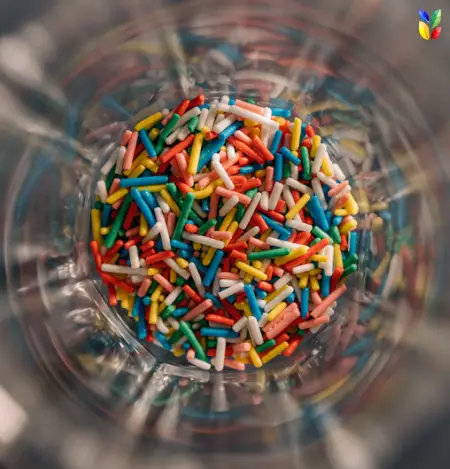
Spring palette: Pastels dominate. Pale pink, baby blue, lavender, pastel green, white, light yellow. Beetroot for pinks, spirulina for blues and greens, annatto or turmeric in low concentrations for pale yellows.
Summer palette: Saturation increases significantly. Coral, turquoise, electric blue, hot pink, bright yellow, lime green. Butterfly pea flower extract for natural blues, paprika for orange and coral tones, spirulina for bright greens.
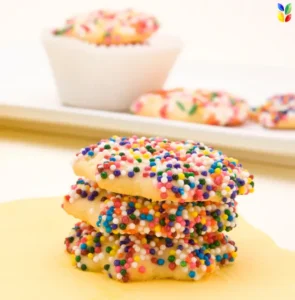
Key R&D consideration — heat stability: Saturated natural colors are more vulnerable to heat degradation than pastels. When qualifying summer colorants, test at the upper end of your standard oven temperature range and document the delta-E color shift. Request color specification ranges per lot from your supplier; natural pigments carry inherent lot-to-lot variability, and without documented tolerance ranges, your QC team will be chasing inconsistencies in production.
The Institute of Food Technologists publishes peer-reviewed research on natural pigment stability in baked applications if you need a technical baseline for your qualification protocols.
The Case for Dye-Free Across Both Seasons
Dye-free natural decorating sprinkles are no longer a specialty item. They are the baseline requirement in premium retail and foodservice channels, and that baseline is expanding into conventional grocery.
From a regulatory standpoint, the direction is unambiguous. The European Food Safety Authority moved first — Allura Red (Red 40) and tartrazine (Yellow 5) carry mandatory warning labels across the EU. The FDA’s March 2025 announcement on phasing out petroleum-derived synthetic colors from the U.S. food supply follows the same trajectory, on a delayed timeline. If you are selling into both markets, a single dye-free formula is the only path to one compliant label shipped everywhere. Maintaining separate formulations — natural for Europe, synthetic for North America — adds regulatory complexity, documentation burden, and reformulation risk every time the FDA advances its timeline.
The practical implication for R&D: building your entire seasonal decorating program around natural dye sprinkles from the start eliminates the mid-cycle reformulation risk. Your colors change with the season. Your formula does not.
How to Manage the Spring-to-Summer SKU Calendar Without Supply Gaps
Seasonal decorative ingredients create predictable supply pressure points. This is a system that addresses them:
- Commit to summer ingredients when spring ships. By the time your spring inventory lands in your warehouse, your summer palette order should be locked. Suppliers see demand surges in Q2 and Q3. Waiting for spring sell-through data to inform your summer order means you’re placing that order into a tighter lead time window than you planned for.
- Consolidate your decoration suppliers. Running spring and summer palettes through a single qualified supplier cuts your document management load significantly: one COA format, one allergen statement standard, one facility certification to verify. It also eliminates the risk of spec discrepancies between seasonal sources — mismatched colorant standards between your spring and summer supplier are a QC problem waiting to happen.
- Build buffer stock for transition months. April and May sit between spring and summer in most U.S. retail calendars. Multi-use natural holiday sprinkles in a broad color range let you cover both seasons from a single SKU during this window without carrying duplicate inventory.
- Account for shaped sprinkle lead times. Heart sprinkles, stars, flowers, and other shaped decorators require additional production steps compared to jimmies and nonpareils. Build 8–10 weeks of lead time into your shaped decorator orders relative to your production start date.
What to Ask Your Supplier Before the Summer Window Opens
Not every natural sprinkle supplier can handle a high-volume seasonal transition on a compressed timeline. Before committing, get answers to these:
- Can you provide color specification ranges per lot on the COA? Natural colorants have inherent lot-to-lot variability. A qualified supplier documents acceptable color spec ranges on each COA. Without this, color consistency across production runs becomes your QC team’s problem, not the supplier’s.
- What are your lead times for summer colorants specifically? Butterfly pea blue and paprika-derived coral are high-demand items in Q2. Confirm available lead times against your production calendar before assuming standard turnaround applies.
- Do you meet EU colorant regulations? If you sell into the UK or EU, your supplier must comply with European colorant standards. Many North American suppliers do not. Verify this before onboarding, not after.
- Do you have regional distribution in the U.S.? For large orders, regional warehouse access matters. It reduces delivery risk and lead time variance, particularly during peak Q2 demand periods.
- Are your organic sprinkles certified organic? Organic labeling requires certified-organic ingredient sourcing. Request certification documentation, not just a declaration.
FoodGrid’s SweetGrid platform covers seasonal sprinkle programs across spring, summer, fall, and winter palettes, with full compliance documentation provided at onboarding.
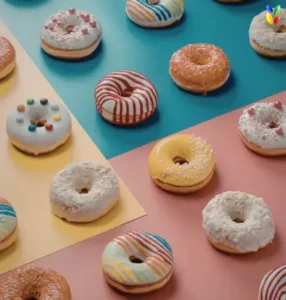
Building the Clean-Label Summer Line: Ingredient by Ingredient
A well-structured summer decorating program covers these ingredient categories:
- Natural decorating sprinkles for conventional bakery SKUs. Jimmies, quins, and strand sprinkles in summer colorways. Source in natural dye variants with verified colorants. Confirm heat resistance against your production oven temperature range.
- Natural blue sprinkles for tropical and beach-themed SKUs. Butterfly pea flower extract produces a strong blue without synthetic dyes. Test heat resistance carefully; blue is among the most temperamental natural colorants under baking temperatures. In some applications, blue holds better as a post-bake decoration.
- Natural dye heart sprinkles for gift and seasonal assortments. Heart shapes bridge spring into summer product lines. Order well ahead of your production start, given the extended lead times for shaped decorators.
- Dye-free organic Easter sprinkles as a transitional SKU. If you are carrying spring inventory into April and May, dye-free organic Easter sprinkles in pastel pink, blue, and yellow serve both the remaining spring season and the early summer transition without a separate SKU changeover.
- Custom natural colorant blends for retailer brand programs. Some retail programs require pre-defined color ratios tied to brand palettes. An experienced supplier can formulate custom blends from their existing natural colorant line without requiring a new base formula. The colorants are natural; the blend ratio is custom; the label remains clean.
The Regulatory Tailwind: Where the Timeline Stands
In March 2025, the FDA announced its intention to phase out petroleum-derived artificial colors from the U.S. food supply. This is not a vague future signal it is a declared regulatory direction with active timelines under development. Red 40, Yellow 5, and Yellow 6 are all under review. Products reformulated now are ahead of the compliance curve; products still relying on synthetic dyes face a mandatory reformulation under tighter timelines and with less supplier flexibility.
For R&D teams managing a seasonal SKU calendar, the spring-to-summer transition is a practical window to advance your clean-label strategy at the decorator level, sprinkles, nonpareils, and sanding sugar without touching the core product formulation. It is the lowest-friction point to make the change.
Take the Delay Out of Your Summer Transition
The teams that move fastest between seasons lock in natural decorating ingredients early, consolidate to a single qualified supplier across multiple palettes, and have documentation ready before the buyer asks for it.
FoodGrid supplies natural dye sprinkles, organic sprinkles, natural blue sprinkles, natural dye heart sprinkles, dye-free natural decorating sprinkles, and seasonal blends for spring, summer, fall, and winter programs with COAs, allergen statements, colorant source documentation, and facility certifications included at onboarding.
Reach out to FoodGrid’s ingredient team with your summer manufacturing calendar, color specifications, and labeling requirements. We will provide SKU options and a documentation package aligned to your production window.
Real Ingredients. Smarter Solutions.