



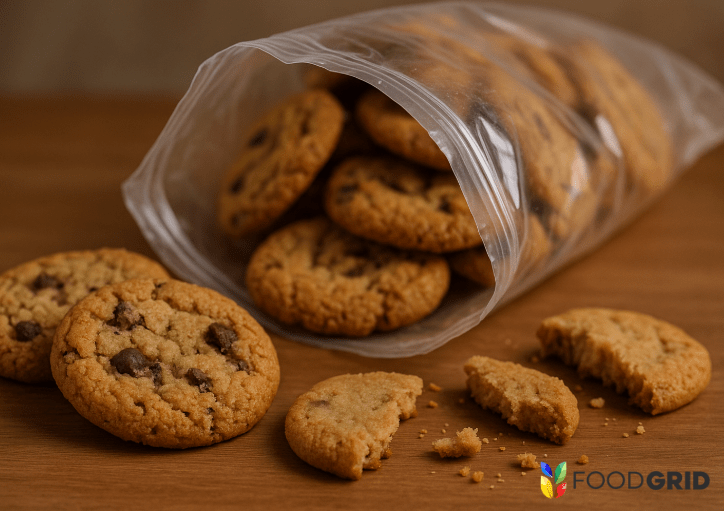
You’ve baked it right, timed the bake to perfection, and packaged your cookies exactly as you planned. Yet by the time they reach the customer—after warehouse storage, air freight, truck delivery, shelf time—they’ve lost their crisp snap and turned soft or stale. That comfort snack craving you intended to deliver becomes a texture disappointment. For snack and cookie manufacturers, bakery R&D teams, and QA specialists, this is a costly failure: consumer perception drops, product claims suffer, and returns or complaints climb. The good news? The culprit is often moisture migration and fat formulation — and the fix is more straightforward than you might think. By choosing the right shortening and formulation strategy, you can preserve cookie texture through transit and shelf life.
This blog dives into why cookies lose texture in transit, how moisture migration ruins crispiness, why the right shortening formulation locks in texture, real-world formulation and stability testing practices, and how FoodGrid Inc. provides solutions for texture stability in distribution-heavy products.
The Challenge: Texture Loss in Packaged Cookies during Transport
Cookies may look perfect when they leave the bakery—or even just after final packaging—but the journey from production line to consumer shelf introduces a sequence of stressors. In a distribution-heavy supply chain, your product may face:
- Fluctuating temperatures (warm trucks, cool warehouses, humid docks)
- Long dwell times (weeks in warehouse before retail display)
- Varying relative humidity (RH) and exposure to ambient moisture
- Interaction between packaging atmosphere, product internal moisture, and ambient air
These conditions give rise to the dreaded phenomenon: once crisp cookies become limp, chewy or even soggy. From an R&D or QA standpoint, this means your sensory texture target at bake time does not guarantee the same texture at the point of consumption.
Why does this happen? Two primary mechanisms are at play:
- Moisture migration: Water moves from regions of higher water-activity to lower water-activity until equilibrium is approached. A crisp cookie (low water-activity) sitting in a package with humid air or adjacent components with higher water-activity will absorb moisture and soften. Grist+1
- Fat and structural collapse: Fats in the cookie formulation—especially if they have low melting points or are unstable—may soften or migrate, undermining the crisp structure of the bake. Packaging and storage may accelerate oxidative or physical changes.
For manufacturers, this means that texture degradation is not just a matter of “it didn’t bake right” — it’s a logistics and formulation issue. The consequence: reduced shelf life for the desired crispness, increased risk of returns or quality complaints, and forfeited margin on premium texture claims.
In short, maintaining crispness from bakery to box to consumer requires deliberate design for the full supply chain.
Why Moisture Migration Ruins Crispiness
To understand how to prevent texture loss, we need to look at the science of moisture migration and texture.
Water Activity (a_w) and Equilibrium
As noted by food science blogs, a dry, crispy food has low moisture content and low water activity (a_w), whereas soft or moist products have higher a_w. Grist When you package a crisp cookie and store it in an environment with higher ambient humidity or adjacent moisture-rich products, moisture will tend to migrate into the cookie until equilibrium is approached.
This migration does several things:
- Increases moisture content, raising the a_w and softening the brittle cookie matrix.
- Plasticizes starch and protein networks in the cookie, reducing structural rigidity.
- If combined with fat migration, it reduces the “snap” on bite.
Packaging and Ambient Environment
Even the best barrier packaging will have limits. If your cookie is stored for long periods, especially in climates with high humidity (e.g., as in many regions of Southeast Asia or tropical environments), the relative humidity (RH) and temperature swings will create a strong driving force for moisture uptake. In addition, adjacent components (e.g., inner liner, printed film adhesives, or secondary products) may have higher a_w and can serve as moisture sources.
Impact on Texture and Shelf Life
The practical result: a crisp cookie becomes “soft” to the touch, loses the audible snap, and the hallmark sensory cue of freshness is diminished. For snack manufacturers and QA teams, this means the defined shelf life for crispness is shorter than anticipated. The product may still be safe (microbiologically stable) but fails to meet the sensory expectations. This is especially critical when the distribution chain includes long-haul transport, export markets, or multiple warehouse stages.
Hence, in the design of a crisp cookie for high-volume distribution, moisture migration must be considered as much as the bake itself.

How the Right Shortening Formulation Locks in Texture
With moisture migration and fat instability as key challenges, the right fat (shortening) formulation becomes a pivotal tool for preserving texture through distribution and shelf life. Here’s how.
Role of Fat/Shortening in Cookie Texture
Fats play multiple roles in cookies: they impact spread, crumb structure, mouthfeel, and crispness. In research on cookies, fat type is shown to significantly affect texture outcomes, spread ratio, hardness and sensory perception. sciencedirect.com+1
For crisp cookies intended for long-life distribution, the selection and formulation of shortening should meet these criteria:
- High melting point: A shortening that remains solid or semi-solid at elevated storage temperatures helps maintain the product’s structural integrity. A fat that melts easily at ambient warm conditions may lead to fat migration and structure collapse.
- Low moisture content: Shortening with minimal water content avoids introducing additional water into the cookie matrix and helps keep a_w lower.
- Oxidative stability: Given transport/storage exposures, fat oxidation can lead to off-flavors, texture changes, and packaging interactions.
- Compatibility with other ingredients: Shortening must integrate with your mix design, sugar system, flour/starch matrix, and packaging format.
Shortening for Crispy Cookies: Formulation Considerations
As you evaluate or reformulate for crisp cookies designed for shipping and shelf life, consider the following:
- Increase the proportion of higher-melting shortening vs. lower-melting butter or liquid oils. Butter contains about 20 % water, which can contribute to higher moisture uptake or fat migration. home.sandiego.edu+1
- Control the crystal structure of the fat phase — fats with sharper melting transitions help maintain crispness under warm conditions.
- For cookies that must withstand high-humidity environments, a shortening that incorporates moisture-barrier additive systems (e.g., emulsifiers, anti-migration ingredients) can help.
- Evaluate interplay with sugar system: For example, using higher granulated sugar (vs brown sugar) can support crispness because granulated sugar retains less moisture. ice.edu+1
- Optimize overall matrix water activity: A low a_w target helps reduce the driving force for moisture migration.
Formulation Strategy: Locking in Crispness Through Fat-moisture Control
In practice, your R&D team or QA specialists should aim to:
- Define the desired texture target at consumption-point (e.g., snap force, bite count, audible crisp).
- Establish expected worst-case distribution/storage conditions (e.g., 40 °C warehouse, 70 % RH, 8 weeks inventory).
- Select a shortening system that retains a firm fat crystal network at the highest anticipated temperature and humidity.
- Run bake trials and packaging simulations to test texture retention over storage conditions, using accelerated aging as needed (e.g., cyclic humidity/temperature).
- Monitor critical parameters: moisture content, water activity, fat migration, sensory snap value, microstructure if needed.
- Validate packaging barrier performance and ensure that the packaging does not undermine the fat/texture strategy (e.g., migration of moisture from packaging adhesives).
- Incorporate fat stability checks (oxidation, off-flavor, migration) especially for long life/ export markets.
By integrating the right shortening formulation into your cookie design, you create a structural foundation that resists the deleterious effects of transport and storage — locking in crispness until the consumer opens the bag.
Real-World Formulation Adjustments and Stability Testing
Practical implementation is where strategy meets execution. Below are key steps and examples that bakery R&D teams and QA specialists can apply.
Step-by-step Formulation Adjustment
- Assess current baseline: Measure initial texture (e.g., instrumentally via a texture analyzer for snap force, breaking energy) at t=0 (post-bake) and after standard storage conditions (e.g., 4 weeks at 25 °C/60 % RH and 6 weeks at 35 °C/75 % RH).
- Modify fat phase: Replace part of the existing butter/fat blend with a high-melting commercial shortening designed for distribution-heavy bakery applications. Adjust dough moisture and other ingredients accordingly.
- Re-bake and test: Evaluate spread, thickness, moisture content, initial snap, and water activity.
- Accelerated storage simulation: Store samples under worst-case conditions; measure after defined intervals for texture loss, moisture uptake, fat migration (visual or microstructural), and sensory evaluation.
- Packaging interaction study: Use packaged product and simulate transport scenarios (e.g., 10 cycles of 8 h at 40 °C/80 % RH + 16 h at 25 °C/50 % RH). Evaluate texture retention, packaging seal integrity, and internal moisture changes.
- Shelf-life projection: Use data to estimate shelf life for maintained crispness (e.g., time until snap value drops 30 %). Define specification limits and QA checkpoints (e.g., post-production moisture content < 2.5 %, fat migration indicator < x %).
- Production scale-up and documentation: Once formulation validated, document the fat system, processing parameters, packaging specification and storage conditions in your QA/QC system.
Example Adjustments
- A manufacturer of butter-based crisp cookies found that after 8 weeks at 30 °C/70 % RH the cookies had lost ~40 % of initial snap force. By substituting 50 % of the butter with a high-melting shortening and reducing dough moisture by 0.3 % (w/w), they achieved only ~15 % drop in snap force under the same conditions.
- Another bakery exporting to tropical markets adjusted packaging by incorporating a higher-barrier film, but also reformulated the fat phase so that at warehouse temperature of 38 °C the cookie fat remained solid, thereby reducing fat migration and structure collapse during transit.
Stability Testing Tips for QA Teams
- Use instrumental texture analysis (e.g., 3-point bend, snap test) to quantify crispness rather than relying solely on subjective sensory.
- Monitor water activity (a_w) at key time-points; aim for a_a in the finished product that is significantly lower than the packaging headspace or ambient RH equivalent.
- Moisture uptake testing: Package product in representative film, store at accelerated humidity (e.g., 85 % RH) and chart moisture ingress over time.
- Fat migration assays: Evaluate visual appearance (greasy or mottled surface), measure changes to fat distribution (if equipment enables), and sensory off-feel (e.g., “oily” rather than crisp crumb).
- Packaging-fat interactions: Some packaging adhesives or inks may migrate moisture or volatile compounds; ensure packaging materials are specified for high-moisture or high-temperature storage scenarios.
Documentation and QA Specification
As part of your QA protocol, document:
- Fat/shortening lot specs (melting point, moisture, oxidative stability)
- Dough formulation changes (moisture, sugar ratios, fat ratio)
- Packaging film barrier specs (WVTR, OTR, seal integrity)
- Storage condition expectations (max temperature, RH, transit days)
- Sensory and instrument specs at time-zero and end-of-shelf-life (remaining snap %).
By embedding these into your developmental control plan and QA specs, you reduce the risk of texture degradation in the field.
FoodGrid Solutions for Texture Stability in Distribution-heavy Products
At FoodGrid Inc., we specialize in helping snack and cookie manufacturers design formulations that maintain desired textures through complex supply chains. Here’s how we source and support solutions:
Tailored Shortening Systems
We offer shortening formulations specifically engineered for crisp baked products facing transit and shelf-life stress. These systems are formulated to deliver:
- Elevated melting points are suitable for warmer climates
- Minimal moisture content and optimized crystal structure
- Compatibility with high-throughput bakery equipment
- Stability through warehousing, transport, and export conditions
Consulting and R&D Collaboration
Our team works with your R&D and QA experts to:
- Audit your current formulation and distribution chain to identify risk points of texture loss.
- Recommend fat system adjustments (shortening selection, ratio changes, processing modifications).
- Assist with packaging-formulation interactions (e.g., designing barrier packaging aligned with formulation).
- Provide accelerated shelf-life testing protocols, texture instrumentation support, and interpretive QA analytics.
Why choose FoodGrid?
If you’re responsible for snack or cookie product lines and want to eliminate texture failure during transit and shelf life, contact us at FoodGrid Inc. to arrange a formulation review or packaging-formulation audit. Let’s lock in your crisp cookie performance — from bakery line to consumer bite.