



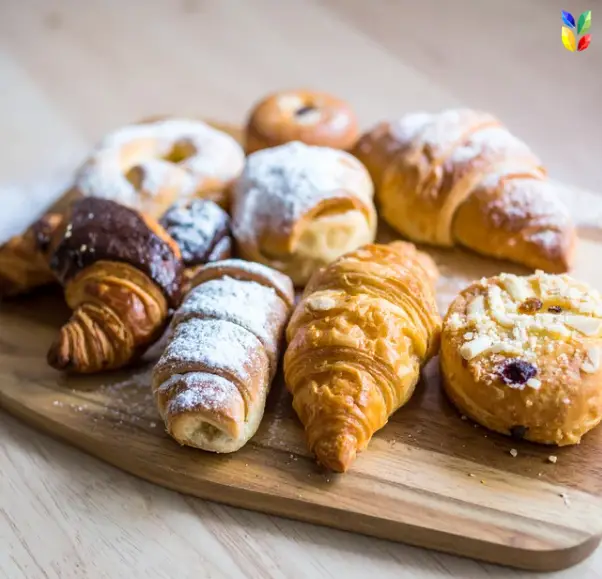
If your lamination line is operating in different ways from shift to shift, from batch to batch, and from plant to plant, that’s not an operator problem – that’s variability in the system. The problems that manifest themselves through fat tearing, fat exudation, and unpredictable dough are problems of malalignment of formulation and process. In high-speed sheeting operations, small variations in margarine processing and inclusions can cause chain reactions of downtime, scrapings, and quality failures.
The answer lies in an understanding of how your fats are performing during production stress.
The Real Cost of Lamination Inconsistency
First presented in industrial pastry production, defects in lamination seldom occur individually. They emerge as follows:
- Fat tearing in sheeting
- Fat bleeding or seepage when at rest
- Dough tearing at the reduction rollers
- Inconsistent lift after baking
More scrap metal and unscheduled shutdowns of the assembly lines for the production engineers and the QA teams, such problems are very annoying because they are intermittent, changing by shift or dependent on the product rate.
The source is always, with a few exceptions, the inconsistent behavior of fat, never dough.
Why Lamination Becomes Unforgiving at Scale
Every lamination requires mechanical and thermal equivalence. In industrial speed applications, there will be no tolerance allowed in the following:
- Fat density
- Fat plasticity
- Dough elasticity
- Temperature regulation
Deviation at a small, manageable level in artisanal methods can be a disaster at a larger scale. This is why processing of margarine at an industrial level needs to be a critical control point, not a secondary point.
The Critical Parameters of Lamination Fat Load
- Firmness: Resistance without Brittleness
Firmness is related to the ease with which the fat layer can be compressed during sheeting. Margarine that is:
- Too firm → leads to breakage and tears into irregular layers of fat
- Too soft → It smears, spreads, and bleeds through the dough
Industrial lamination fats are specifically formulated with a defined solid fat content profile, such that firmness remains optimal for all processing temperatures.
- Plasticity: Capacity to Deform Without Breaking
Plasticity enables fat to extend along with the dough sheet. Where there is low plasticity, it brings about: FAT CRACKING AT REDUCTION ROLL
- Irregular lamination layers
- Weak steam barriers in baking
Plasticity depends on the structure of the fat crystals—essentially the presence of β′ crystals.
- Shear Strength. Overcoming High-Speed Equipment
High speed sheeter applies a large shear force. Margarine with less shear strength will:
- Thin unevenly
- RIP under stress
- Separation of oil from the fat matrix
Shear strength is an area where many commodity margarines are unable to cope.

How the Water Content of Margarine Affects Dough Properties
In the Water Content Is Not Neutral
The presence of water in margarine consists of a water-in-oil emulsion. The level or distribution of the water controls dough interaction.
Excess or loosely bound water may:
- Weaken the dough gluten structure
- More sticking and tearing
- Decrease tear resistance in sheeting
Emulsion Stability and Dough Elasticity
It ensures that water portions are uniformly scattered. In cases of poor emulsion stability:
- Free water migrates into the dough
- The dough will be too elastic or sticky
- Fat Tissues Lose Integrity
This directly impacts inconsistent behavior in dough in different batches.
Even small batch-to-batch differences in water phase stability can cause observable differences on the lamination line, particularly when changing shifts.
Fat Inclusion: Where Most Lamination Problems Begin
Incorrect Fat Block Preparation
It is important that fat tearing may occur even before the dough is sheltered. This includes:
- Inconsistent thickness of fat blocks
- Improper fat block temperature
- Machinery damage caused by cutting or transferring
A damaged fatty block cannot heal during the lamination process.
Temperature Inconsistencies in Dough and Fat Mixes
The temperature difference between the dough and fat should be in a narrow range. An issue arises if:
- Fat is colder than dough → Cracking and tearing
- Fat is hotter than dough → smearing and dripping
It is one of the reasons why Lamination irregularities happen most of the time.
Process Standardization on the Lamination Line
Best practices when handling industrial margarine include:
- Dedicated temperature-controlled storage
- Standardized tempering time prior to use
- Infrared or Probe-Based Temperature Verification
It is unreliable to depend on prevailing conditions. Standardize methods of fat inclusion should be uniform for all operators. This involves:
- Fold pattern definition
- Controlling pressure during the first encasement
- Standardized reduction schedules
Variations at this point cause reverberation of defects.
Synchronize Line Speed and Fat Performance
The protocol speed in high-speed sheeting requires fats meeting those needs. How can a higher speed on the sheeting line result in the following conditions when the characteristics of the fats are not changed?
- Fat thinning
- Edge tearing
- Layer collapse
Optimization of the process necessarily involves fat selection, not only mechanical adjustments.
- Fat Bleeding During Resting
- Fat Bleeding During Proofing
Why Fat “Bleeds
Fat Bleeding: This phenomenon, also referred to as oil separation, occurs when the liquid oil separates out from the fat matrix.
- Excessive fat softening
- Lack of emulsion stability
- Overworked fat during sheeting
This affects the laminating process because the oil weakens the laminating process. This also affects the IMMEDIATE CORRECTIVE ACTIONS.
When fat leakage occurs:
- Check the temperature of the fat and dough.
- Reduce resting time or environment
- Check for Over-R reduction during Sheeting
What works is if temporarily fixable problems are temporarily fixed.
Long-Term Solutions
Ongoing bleeding from the fat. Eradication suggestions:
Reformulated margarine with better emulsion stability
- SFC Profile
- Original SFC Profile
- Adjusted SFC Profile
A better match between fat design and processing conditions.
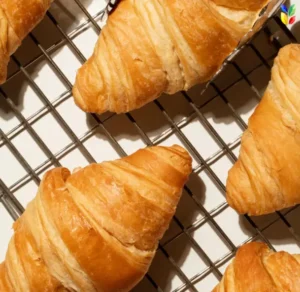
Why the Persistence of the W-52
Some plants have difficulty with consistency despite carrying out SOPs. The problem lies in the lack of tight standards in plant ingredients. This makes it difficult to laminate.
The main variables responsible for the differences among the shifts are:
- Slightly varying temperatures
- Marginal differences in fat firmness
- Inconsistent tempering times
More standardized margarine recipes are less dependent on such factors.
How FoodGrid Achieves Consistency at Scale
FoodGrid develops and manufactures margarine processing lines designed specifically for high-speed laminators. It’s not about the products; it’s about the process.
We offer highly standardized solutions for the production of margarine, helps in forming the material into a flexible yet rigid structure by stable water in oil omuls.
- Predictable behavior under shear conditions
- Less sensitivity to slight changes in temperature
This enables production teams to run faster, for longer, and with greater consistency.
For a successful puff pastry process optimization to be achieved, QA and production teams must align on:
- Fat performance specifications
- Temperature control indicators
- Visual and mechanical defect indicators
With measurable and repeatable fat behavior, troubleshooting is proactive rather than reactive.
Conclusion: Consistency is engineered, hot hoped for lamination irregularities are not unavoidable. Fat tearing, leaks, and dough variations are the effects of inadequate fat characteristics. Inadequate handling controls non-standardized formulations in industrial margarine processing. By focusing on handling, fat inclusion, and standardization, variations can be eliminated, allowing for consistent processing based on standardized parameters. Scaling consistency begins with the right fat network.
Talk to our specialist or request a sample here.