




Feed value is not measured by what is formulated on paper. It is measured by what is absorbed, metabolized, and converted into performance. In today’s cost-conscious production environment, digestibility is the difference between theoretical nutrition and measurable ROI.
Formulated for Performance: Digestibility by Design — Unlocking True Nutritional Value at Scale
Feed represents the greatest expense of production in animal and dairy enterprises. However, many enterprises remain centered on crude nutrient addition rather than biological utilization. Digestibility by design changes the paradigm from the amount of nutrients added to the amount of nutrients actually absorbed and utilized for growth, lactation, or breeding performance.
For the feed industry, precision nutrient delivery has become a necessity for the competition. Volatility of ingredients, environmental issues, and profit pressures require efficiency improvements.
Performance starts with utilization.
Why Digestibility Determines Profitability
Gross energy and crude protein do not make output. What matters is the digestible nutrient level in determining FCR, ADG, and milk yield.
Undigested nutrients increase:
- Feed cost per unit of gain
- Nitrogen and phosphorus excretion
- Environmental compliance risk
According to the National Research Council, the digestible and metabolizable levels of nutrients are the most important factors that determine animal performance. Improved nutrient utilization is also identified by the FAO as an important approach to sustainable livestock productivity.
Improving digestibility by a small margin can make a big difference in cost structures.
Lipid Nutrition: A Critical Lever in Digestibility
Energy density is central to performance. Fats deliver more than twice the energy of carbohydrates, but not all fats perform equally in the digestive system.
Fat digestibility depends on:
- Fatty acid profile
- Degree of saturation
- Position of fatty acids on the glycerol backbone
- Interaction with minerals in the gut
Poorly digested fats reduce energy capture and can interfere with calcium and magnesium absorption. Strategic lipid design is therefore essential.
Palmitic Acid: Targeted Energy for High Performance
Palmitic acid (C16:0) has a unique function in enhancing energy use, especially in dairy and high-performance farming. Studies appearing in reputable scientific journals such as the Journal of Dairy Science have shown that certain saturated fatty acids can enhance milk fat production and energy efficiency when formulated correctly.
High-purity palmitic acid provides:
- Concentrated digestible energy
- Improved milk fat synthesis in dairy cows
- Greater consistency in energy delivery
- Reduced variability compared to mixed fat sources
When used in precision feeding systems, palmitic acid improves energy efficiency without impairing rumen function.
At FoodGrid, we provide high-quality palmitic acid solutions designed for optimal performance in commercial feed systems.

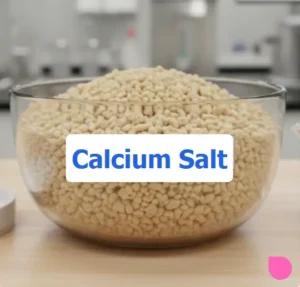
Calcium Salts: Rumen-Protected Energy Delivery
In ruminant systems, fat supplementation presents a challenge. Unprotected fats can disrupt rumen microbial activity and fiber digestion. Calcium salts of fatty acids solve this problem by allowing fats to bypass rumen degradation and become available in the small intestine.
Calcium salts provide:
- Rumen-inert energy delivery
- Improved total tract digestibility
- Maintained fiber fermentation
- Support for peak lactation demands
Based on research published by the National Academies Press and dairy science institutions, rumen-protected fats improve energy balance in early lactation and mitigate metabolic stress.
Calcium salt solutions from FoodGrid are formulated to be stable, bioavailable, and easily incorporated into feed processing systems. Such solutions help to provide a balanced energy source.
Precision Formulation Meets Functional Lipids
Digestibility by design is not limited to protein and enzymes. Lipid structure and mineral interaction directly influence nutrient absorption.
When palmitic acid and calcium salts are integrated into precision formulation strategies, operations can achieve:
- Improved feed efficiency
- Higher milk fat yield
- Better body condition maintenance
- Reduced energy deficits in early lactation
- More predictable performance outcomes
This is not theoretical optimization. It is a measurable operational impact.
Scaling Digestibility Across Feed Networks
Large-scale feed systems face additional complexity:
- Ingredient variability
- Multi-site production
- Supply chain volatility
- Regulatory pressure
To achieve scalability in the improvement of digestibility, data visibility and supply chain coordination are critical. Nutrient strategy needs to be aligned with sourcing, production control, and performance measurement.
FoodGrid integrates ingredient intelligence with feed supply network visibility to help manufacturers and producers make informed decisions regarding nutrient input and performance output.
Feed ecosystems that are integrated minimize inefficiencies before they can get to the animal.
Sustainability Through Efficient Utilization
Improved digestibility does more than enhance performance. It reduces environmental impact.
Higher nutrient absorption leads to:
- Lower nitrogen excretion
- Reduced phosphorus discharge
- Improved resource efficiency
- Lower carbon intensity per unit of output
According to FAO, the improvement of feed efficiency is considered one of the most effective methods for sustainable intensification of livestock production.
The use of high digestibility lipids such as palmitic acid and rumen-protected calcium salts is beneficial for both production and environmental purposes.
Efficiency and sustainability are integrated when nutrient use is optimized.
From Formulation to Functional Performance
Modern feed buyers and integrators no longer evaluate suppliers solely on price per ton. They evaluate:
- Cost per unit of gain
- Energy-corrected milk response
- Stability of supply
- Nutrient consistency
- Regulatory resilience
The ingredients help in improving digestibility, thereby reducing uncertainties and minimizing variations in performance.
Palmitic acid acts as an energy-delivery system. Calcium salts ensure safe delivery in ruminants. They, along with proper feed management, help in translating formulation plans into biological performance.
Inclusion rates do not measure performance. Absorption rates measure performance.
The Competitive Advantage
Operations that prioritize digestibility by design gain measurable advantages:
- Improved return on feed investment
- Reduced production volatility
- Stronger environmental positioning
- Greater scalability across facilities
In high-output systems, marginal gains add up quickly. Energy efficiency during peak lactation, improved FCR in growth phases, and stabilized nutrient supply chains provide a sustained competitive advantage.
Digestibility is not an adjustment. It is infrastructure for performance.
Conclusion
The future of feed performance is about precision nutrient utilization. Digestibility by design combines ingredient science, lipid strategy, and supply chain intelligence into one performance-oriented framework.
Palmitic acid and calcium salt solutions are at the forefront of this approach, providing concentrated and accessible energy in optimized forms for absorption. For feed manufacturers, integrators, and producers committed to measurable performance, the imperative is clear: formulate for utilization, not assumption.
If your business is ready to improve feed efficiency with high-performance lipid solutions and supply chain intelligence, contact FoodGrid today.
Learn about our palmitic acid and calcium salt solutions and discuss your digestibility optimization strategy with our team. Talk to our specialist or request a sample.