




Artificial colors are losing shelf space. Clean-label ingredients have become the preferred selection for customers when they buy products. Natural rainbow sanding sugar has become an essential ingredient for commercial bakeries and food manufacturers because it functions as a strategic ingredient selection.
Introduction: Why Natural Sanding Sugar Matters in B2B Food Production
Color functions as a vital factor that determines how customers view products. The bakery and dessert industry uses vibrant finishes to show customers that their products remain fresh while demonstrating both high quality and indulgent value. The color that used to be manufactured from synthetic dyes now comes from different sources because market trends have evolved.
Retailers, regulators, and consumers now demand naturally colored ingredients because these products meet clean-label requirements while maintaining their original performance levels. The natural rainbow sanding sugar provides B2B buyers from commercial bakeries, co-packers, and private-label brands and foodservice operators with a dependable solution that creates an attractive visual effect.
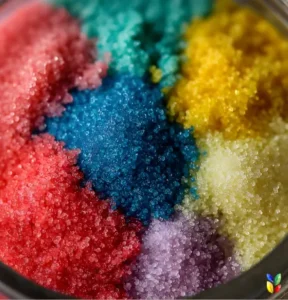
The production of natural rainbow sanding sugar follows a process that uses plant-based and mineral-based ingredients to create its colors instead of depending on synthetic dyes. The ingredient exists in multiple colors which include white and yellow, orange and green, pink and red, and purple and blue, to create visual effects while allowing clear product information and meeting changing regulatory requirements.
What Is Natural Rainbow Sanding Sugar?
Natural rainbow sanding sugar is a coarse-grain sugar designed for decorative applications. The large crystals of sanding sugar create a sparkling effect because they do not melt during baking and they keep their texture after baking.
Key Characteristics
- Large crystal size for sparkle and surface adhesion
- Heat-stable performance in baked applications
- Naturally derived colors from fruits, vegetables, and plant extracts
- Consistent granulation for automated and high-volume production
For B2B operations, consistency across batches is critical. Natural sanding sugar must deliver uniform color, crystal size, and flow properties to integrate seamlessly into commercial processes.
The Natural Color Advantage
Artificial colors such as FD&C dyes are increasingly scrutinized. Natural alternatives offer both regulatory and marketing advantages.
Common Natural Color Sources
- White: Refined cane sugar without added color
- Yellow & Orange: Turmeric, annatto, carrot
- Red & Pink: Beet juice, radish
- Purple & Blue: Purple carrot, spirulina blends
- Green: Chlorophyll and blended plant extracts
The sources have gained widespread acceptance because they meet clean-label requirements, which apply to both North American markets and international business sectors.
The FDA requires natural color additives to follow different labeling rules, which impact how consumers see these substances compared to synthetic dyes.
Applications Across Commercial Food Production
Natural rainbow sanding sugar is designed for surface decoration, making it ideal for products where visual differentiation drives sales.
Bakery Applications
- Cookies and biscuits
- Donuts and pastries
- Muffins and quick breads
- Seasonal and limited-edition baked goods
Confectionery & Dessert
- Cupcake toppings
- Cake borders and accents
- Ice cream inclusions
- Chocolate enrobing finishes
Foodservice & Hospitality
- Ready-to-use dessert garnishes
- Event-based and seasonal menus
- Premium plated desserts
In all applications, the sugar maintains color integrity and crunch, even under moderate heat exposure.
Performance Considerations for B2B Buyers
When sourcing natural sanding sugar at scale, performance matters as much as appearance.
- Heat Stability
High-quality natural sanding sugar resists color bleed and fading during baking, maintaining visual consistency across production runs.
- Flowability
Uniform crystal size ensures smooth flow through automated sprinkling and decorating systems, reducing waste and downtime.
- Adhesion
The coarse texture allows crystals to adhere to doughs, batters, and frostings without dissolving prematurely.
These functional attributes are essential for manufacturers operating at commercial volumes.
Clean Label and Regulatory Alignment
Clean label is not a trend—it is an operational requirement for many B2B customers.
Natural rainbow sanding sugar supports:
- Simplified ingredient statements
- Retailer clean-label programs
- Private-label transparency standards
- Export market compliance
Organizations like the Center for Science in the Public Interest (CSPI) and the FDA continue to influence how color additives are perceived and regulated, accelerating the shift toward natural alternatives.
Shelf Life and Storage
For distributors and manufacturers, shelf life impacts cost control and inventory planning.
Typical Storage Requirements
- Cool, dry environment
- Airtight, food-grade containers
- Protection from moisture and direct light
When stored properly, natural sanding sugar maintains color vibrancy and crystal integrity over extended periods, making it suitable for large-scale procurement.
Sustainability and Ethical Sourcing
Beyond clean labeling, sustainability is increasingly relevant in B2B procurement decisions.
Natural sanding sugar aligns with:
- Plant-based color sourcing
- Reduced reliance on petrochemical dyes
- Supplier traceability initiatives
Many food manufacturers now require ingredient partners that support ESG and responsible sourcing commitments.
Why Natural Rainbow Sanding Sugar Is a Strategic Ingredient
From a business perspective, natural sanding sugar is not just decorative—it is strategic.
Key B2B Benefits
- Enhances product differentiation without reformulation
- Supports premium positioning and higher margins
- Reduces risk associated with synthetic color scrutiny
- Aligns with retailer and consumer expectations
For private-label and contract manufacturing, these advantages translate into stronger buyer confidence and broader market access.

Sourcing Natural Sanding Sugar at Scale
B2B buyers should evaluate suppliers based on:
- Consistency across color batches
- Ability to meet volume requirements
- Documentation and specifications
- Supply chain transparency
Platforms that streamline sourcing and supplier discovery can significantly reduce procurement friction.
Who Uses Natural Rainbow Sanding Sugar?
Primary B2B Buyers
- Commercial bakeries
- Food manufacturers
- Private-label brands
- Ingredient distributors
- Foodservice operators
Buyer Priorities
- Clean-label compliance
- Reliable supply
- Competitive pricing at scale
- Technical performance
- Documentation and traceability
These buyers are less concerned with novelty and more focused on scalability, reliability, and regulatory alignment.
Market Trends Driving Demand
The natural food color sector shows continuous expansion according to current industry statistics. The natural food colors market worldwide continues to grow because customers want to see their food clearly while they also want products that maintain their original composition. Decorative elements now form an essential part of these product modification efforts. The market for natural sanding sugar belongs to this particular expanding market sector.
Integrating Natural Sanding Sugar Into Existing SKUs
One of the biggest advantages of sanding sugar is its non-invasive integration.
- No impact on core formulations
- No changes to baking times
- Minimal process adjustments
This allows manufacturers to upgrade visual appeal and labeling without costly R&D cycles.
Internal Use Cases Across FoodGrid
FoodGrid supports B2B buyers in discovering and sourcing specialty ingredients, including decorative sugars, through a centralized, supplier-focused platform.
Explore:
- Ingredient discovery tools
- Supplier transparency resources
- Market insights for food manufacturers
Looking to source natural rainbow sanding sugar at scale? Talk to our specialist or request a sample.