

Your production line does not shut down due to a lack of supply. Nor does that of your competition.
April has arrived. Q2 has commenced. And if your procurement department has not secured your supply of the ornamental product ingredients – namely, your natural sprinkles, natural dye sprinkles, and natural rainbow sprinkles – then your company is already late to the game. This is not a stagnant marketplace. The forces driving the evolution of the natural colors supply chain are dynamic, and those companies that choose to wait will suffer the consequences, whether through increased prices, longer lead times, or manufacturing delays from which they cannot recover.
This article provides an unvarnished analysis of the current market conditions, their relevance to Q2 profitability, and what sustainable purchasing entails during periods of volatility.
The Market Has Changed. Your Sourcing Strategy Should Too.
The move away from artificial colors is not a fad; rather, it is a mandatory regulation enforced with strict guidelines.
The FDA banned Red No. 3 in January 2025, allowing manufacturers two years to find alternatives. The next month, the FDA announced plans for a total ban of petroleum-based synthetic food colors from the American food chain. Already, brands like General Mills, Kraft Heinz, Nestle, and Conagra have agreed to eliminate the use of synthetic colors in their products sold in America. Each one of those is increasing the demand for natural colors and dyes.
What does that mean to you? That means the market for natural dye sprinkles and natural colored sprinkles is being stretched thin more and more with each new product reformulation. There is a surge in demand and no increase in the elasticity of the supply. Climate and growing season constraints are only part of the problem. According to supply chain analysts, the increased demand for these materials could lead to major disruptions.
You need to place your order before May. If you wait any longer, you are going to lose your spot.
Why Natural Sprinkles Are a Strategic Ingredient, Not a Commodity
Even many modern sourcing teams continue to regard sprinkles as an auxiliary product – a line item that is replenished once the supply is running out. This strategy no longer works.
In the world of natural sprinkles with colors derived from plants and standing out with vivid hues, your customers will understand that your products have been manufactured according to clean-label requirements and using consciously selected ingredients. Today, this message is a competitive advantage in the eyes of the buyers.
The increasing demand for products with clean labels has driven up the global market value for natural food colors to $4.03 billion, a CAGR of 7.8%. In the U.S., the forecasted growth in this segment of the market is estimated at $318.3 million in 2025 and $579.1 million in 2035. These forecasts involve the use of the same raw materials such as vegetable juices, annatto, beta-carotene, and carnauba wax, used for manufacturing all-natural sprinkles.
Increased demand. Same crop areas. Same opportunities for production. In this situation, the supply becomes unpredictable. And Q2, with its spring baking season and various events like Easter, Mother’s Day, graduations, etc., is one of the busiest seasons in the year.
What Market Volatility Looks Like in Practice
Specifically speaking, here is how volatility impacts the line in the case of sourcing too late:
- Increased spot pricing. In the event that one books too late, then it means that one will be buying on the open market and not according to contracts. The 10% to 15% cost increase in bulk sprinkle orders puts additional financial pressure on your ingredient budget.
- Delayed delivery periods. As discussed earlier, natural dyes are available depending on the seasons due to the availability of crops at particular times of the year. Lack of stock from suppliers due to the demand in the market during peak periods means delayed delivery.
- Interruption in production. Lack of a key SKU could mean a production delay if such an item is required for the entire line. For instance, a backorder of the organic or natural rainbow sprinkles in Q2 means a complete stoppage in production until the ingredient becomes available.
- Reformulation risk. If there is a need to get a different type of ingredient because of the delay in delivery, then that might affect the label claims and create non-compliance problems. Switching to another ingredient mid-way through Q2 creates challenges.
All these challenges have been seen in practice.
What “Performance-Ready” Stock Actually Means
When sourcing teams talk about a “performance-ready backbone,” they mean ingredients that show up on time, meet spec every time, and do not create downstream problems.
For all natural rainbow sprinkles and natural colored sprinkles, that means:
- Clean label compliance. Non-GMO Project Verified, soy-free, nut-free, dairy-free, gluten-free, vegan, kosher. Your product’s certifications are only as good as your ingredients’ certifications. Confirm your supplier’s verification before you confirm your order.
- Color consistency. Plant-derived colors can shift batch to batch if the manufacturer’s formulation is not tightly controlled. You need a supplier whose R&D team has locked in color performance — vivid, stable, and shelf-stable.
- Bulk availability. Q2 volume means you need to supply in 10 lb, 25 lb, and 50 lb formats, ready to move. A supplier with multi-format availability gives your operations team flexibility without forcing a reorder cycle mid-quarter.
- Supply chain visibility. You need to know where your ingredients are at any point in the logistics chain. A supplier with temperature-controlled warehousing, a positioned distribution network, and reefer transport protects product quality from origin to dock.
This is not asking for perfection. It is asking for a supplier who treats your uptime as seriously as you do.
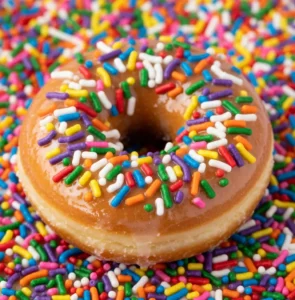
FoodGrid’s natural colored sprinkles line ticks all these boxes. Our ingredient is non-GMO verified, allergen-free, and contai clean-label by default, without you having to make any changes to the formula a clean label by default, without you having to make any changes to the formula ns 100% natural ingredients, including natural plant and vegetable juice colorants, without any preservatives or hydrogenated oils. It meets the criteria for being a clean label by default without you having to make any changes to the formula yourself.
The Sustainability Director’s Angle: This Is Also a Values Decision
For those brands that have publicly announced sustainability commitments, which the vast majority of enterprise food brands have made, their sourcing must reflect this commitment. Organic sprinkles and all natural sprinkles cannot simply be seen as margin-protection measures; they must also be viewed as brand-protection measures.
The sustainability director knows that ingredient transparency has become an audit requirement. The retailer demands it, the consumer demands it, and ESG reporting documents it. It makes sense to source rainbow sprinkles that are both organic and all-natural to meet this audit requirement.
Tracing the sources of your ingredients helps you maintain premium pricing while attracting conscientious consumers. This is more than just cost control; it is a competitive advantage.
By committing to sourcing ingredients early on, you are helping to ensure your sustainability story into Q2 and even Q3 launch plans. If you opt for a substitute at the eleventh hour, however, it is likely that this will leave a gap in your supply chain documentation.
FoodGrid’s supply chain spans seven global manufacturers with built-in R&D, compliance standards, sustainability tracking, and logistics support. That is the infrastructure that backs up your brand’s commitments when a retail buyer or an ESG auditor asks the question.
Your Q2 Procurement Checklist
Before you close this post, run through these checkpoints with your sourcing team:
- Stock confirmation. Have you confirmed your Q2 volume of natural sprinkles, natural colored sprinkles, and all-natural rainbow sprinkles with your supplier?
- Certification review. Do your current decorative ingredients carry Non-GMO Project Verification, allergen-free status, and kosher certification — and do you have documentation on file?
- Lead time review. Do you know your supplier’s current lead time for bulk sprinkle orders? Has it changed in the last 90 days?
- Contract vs. spot pricing. Are you buying on a contract rate or spot rate? If spot, what is the cost variance if market prices move 10%?
- Storage and logistics. Does your supplier offer temperature-controlled storage and tracked delivery? For a product as sensitive to moisture and heat as sprinkles, that matters.
If any of these answers are unclear, that is the signal to act now. FoodGrid’s purchasing team positions clients in both short- and long-term bookings based on market conditions — exactly the kind of proactive procurement support that protects Q2 margins when volatility hits.
The Bottom Line
April is the window. Demand spikes rapidly during Q2, but the supply of natural ingredients cannot be ramped up quickly. The companies securing their sources for natural sprinkles, organic rainbow sprinkles, and natural dye sprinkles at this moment will safeguard their profit margins and production schedules for the rest of the quarter.
Those who delay will pay the price.
Ready to Secure Your Q2 Sprinkle Supply?
Connect with FoodGrid’s sourcing team today. We stock a full range of Non-GMO natural sprinkles, natural individual colored sprinkles, seasonal blends, and natural sprinkle shapes — all Non-GMO Project Verified, allergen-free, kosher, and available in bulk formats. Our team will lock in your pricing, confirm your lead time, and get your Q2 stock moving before the window closes.
Contact FoodGrid now at foodgridinc.com and get your Q2 order confirmed this week.