



Spring Into Sustainable Baking: Why Responsible Palm Oil Matters in 2026
Retailers and foodservice buyers expect suppliers to prove measurable environmental and social performance. For product teams, responsible palm oil sourcing in 2026 is no longer optional — it is a commercial requirement that affects shelf access, contract terms, and long-term buyer relationships. This guide explains RSPO supply-chain models, current retailer requirements, and how a traceable sourcing strategy strengthens B2B partnerships while minimizing operational disruption.
Plan a short, targeted audit with FoodGrid to map RSPO risk, clarify retailer expectations, and build a traceable sourcing plan.
Responsible palm oil sourcing is now a commercial requirement — not an option. Talk to our specialist to jumpstart your traceable sourcing strategy, secure RSPO-aligned supply, and protect shelf access before buyers tighten standards.
Responsible Palm Oil Sourcing 2026: What R&D and Procurement Need to Know
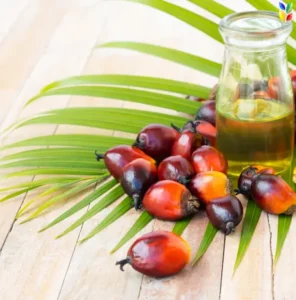
Palm oil’s functional benefits make it prevalent in bakery fats, glazing systems, and inclusions. But in 2026, the commodity’s social and environmental risk profile means buyers won’t accept opaque supply chains. Suppliers who demonstrate credible certification, NDPE (No Deforestation, No Peat development, No Exploitation) alignment, and mill-level traceability win preference, reduce delisting risk, and open opportunities for premium listings.
From an operational view, responsible palm oil sourcing 2026 should be treated as a program: it must combine certification selection, supplier auditing, contractual safeguards, traceability systems, and R&D validation so formulation and commercial intent remain aligned.
RSPO Certification: Choosing the Right Supply-Chain Model
The Roundtable on Sustainable Palm Oil (RSPO) remains the practical certification benchmark. RSPO supply-chain models differ in traceability and claim strength:
- Identity Preserved (IP): Oil comes from one certified source — the strongest traceability and on-pack claim.
- Segregated (SG): Certified oils are physically separated from non-certified oils but may come from multiple certified sources — common retail expectation for finished foods.
- Mass Balance (MB): Certified and non-certified oils can be mixed, but volumes are accounted for — pragmatic for scaling certified volume.
- Book & Claim (B&C): Certificates are traded without physical segregation — supports market transformation but does not provide mill-level traceability.
For finished goods sold to major retailers, Segregated or Identity Preserved remains the preferred choice. Mass Balance is a realistic stepping stone when Segregated volumes are constrained; Book & Claim is a market-development tool, not a traceability solution.
R&D implication: specify acceptable supply-chain models in ingredient specs and plan stability and performance testing for the chosen certified oil.
What Retailers and Foodservice Buyers Require in 2026
Retailer requirements now typically extend beyond RSPO checkboxes. Expect requests for:
- NDPE commitments and time-bound plans to eliminate deforestation and peat development.
- Mill-level traceability and increasing pressure for plantation-level transparency.
- Third-party verification and public disclosure of sourcing footprints.
- Supplier grievance mechanisms and corrective action protocols.
- Contractual audit rights and supplier scorecards tied to sustainability KPIs.
For procurement teams, the practical effect is that certification alone is insufficient. Buyers want evidence of ongoing supplier management: traceability reports, remediation plans, and improvement metrics. Incorporate these expectations into supplier onboarding and contractual language.
Operational Implications: From Specification to Shelf
Responsible palm oil sourcing 2026 requires cross-functional execution.
Supplier mapping and audit: Maintain a ledger of supplier RSPO status, mill traceability, NDPE alignment, and corrective actions. A targeted supplier audit reduces uncertainty and identifies capacity constraints.
Formulation and specification updates: Define allowable supply-chain models and acceptable functional tolerances (color, melting profile, oxidative stability). When switching to Segregated or IP oils, bench-scale testing is essential to confirm performance under your process conditions.
Contract and procurement design: Negotiate clauses that lock in NDPE commitments, traceability reporting cadence, and corrective-action timelines. Clarify MOQs and lead times for Segregated volumes, and include contingency provisions to manage shortfalls.
Traceability systems: Require mill-level reporting and, where feasible, plantation mapping. Automation of traceability fields into supplier portals simplifies reporting and audit readiness.
Cross-functional alignment between R&D, procurement, and commercial teams reduces the risk of late-stage reformulation or compliance failures.
How Responsible Sourcing Strengthens B2B Partnerships
Brands that demonstrate credible sourcing programs become preferred suppliers. The commercial benefits include:
- Stronger purchasing relationships: Retailers prefer suppliers who reduce sourcing risk, which leads to steadier purchase orders and longer contract terms.
- Fewer commercial holds: Transparent traceability and rapid corrective actions reduce the chance of delisting or in-market remediation.
- Premium opportunities: Sustainable SKUs with verifiable claims are more likely to access premium listings and marketing support.
- Collaborative innovation: Suppliers who can guarantee traceable inputs are better partners for co-developed, differentiated formulations.
These outcomes follow only when suppliers can operationalize certification into repeatable, auditable processes — not merely purchase certificates off the shelf.
Practical Roadmap: Implementing Responsible Palm Oil Sourcing in 2026
A pragmatic rollout balances speed and rigor. The following roadmap is designed for teams that need results within a commercial window:
- Phase 1 — Rapid assessment (0–4 weeks):
Conduct a supplier audit to document RSPO status, NDPE alignment, and mill traceability. Prioritize SKUs by volume and retailer exposure. - Phase 2 — Specification & pilot (4–12 weeks):
Update ingredient specs to state acceptable supply-chain models. Run bench-scale and pilot runs to validate color, melting, and heat stability. Negotiate MOQs and lead times for Segregated volumes. - Phase 3 — Contracting & systems (12–20 weeks):
Include NDPE clauses, traceability reporting requirements, and audit rights in supplier contracts. Implement traceability fields in procurement systems and define KPI cadence. - Phase 4 — Scale & continuous improvement (20+ weeks):
Scale production with certified volumes, report traceability metrics to buyers, and run supplier improvement programs. Maintain quarterly supplier reviews and public summaries where required.

Measurement: KPIs That Matter
Track a concise set of KPIs to demonstrate program performance and improve supplier management:
- Percent of palm oil volume under Segregated or Identity Preserved
- Traceability coverage to mill and plantation (%)
- Time to close corrective actions (days)
- Supplier compliance rate with NDPE clauses
- Volume at risk due to supplier issues
Report these indicators to buyers during commercial reviews and use them to prioritize supplier investments.
Common Implementation Challenges (And How to Overcome Them)
- Capacity constraints for Segregated volumes. Address with a phased approach: start Mass Balance for volume while contracting Segregated volumes for high-risk SKUs.
- Formulation performance gaps. Validate new certified oils in lab and pilot runs early to isolate differences in color, melting point, and mouthfeel.
- Data and reporting complexity. Standardize supplier data fields and automate reporting to reduce manual effort and increase accuracy.
- Commercial negotiation friction. Use shared KPIs and transparent improvement plans; retailers often accept phased commitments when suppliers present credible roadmaps.
Responsible palm oil sourcing is a 2026 commercial imperative. FoodGrid helps R&D, procurement, and brand teams convert certification strategy into production-ready solutions that protect shelf access and strengthen buyer relationships.
Start your palm oil sourcing plan with a focused audit and stepwise implementation. Plan your consultation.