


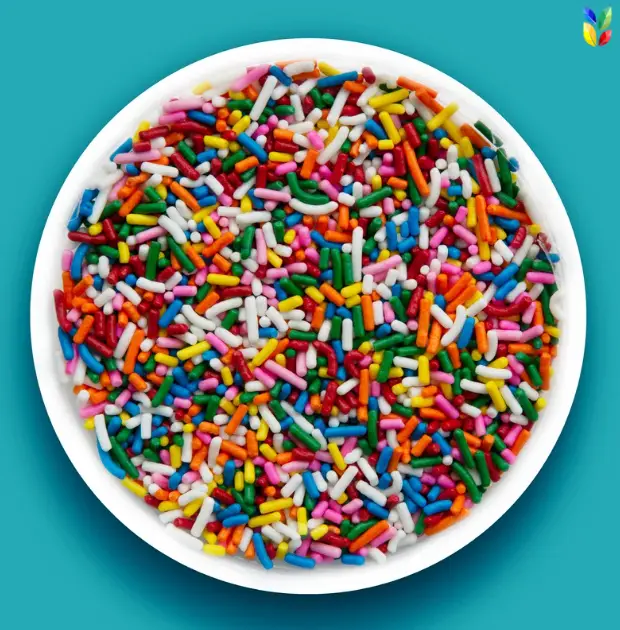
Green That Performs: Engineering Seasonal Sprinkles for High-Heat Baking
Seasonal baked goods demand visual impact—but high oven temperatures often destroy the color, structure, and distribution of decorative sprinkles. For R&D teams and product developers, engineering green sprinkles that maintain color integrity and structural performance during high-heat baking requires careful control of pigments, particle size, and application methods. When done correctly, decorations like shamrocks, green jimmies, and floral sprinkle blends can retain vivid color, deliver consistent coverage, and integrate efficiently into commercial baking workflows.
For brands developing seasonal products such as St. Patrick’s Day cookies, spring cupcakes, and themed snack cakes, sprinkle engineering is not a cosmetic decision—it is a formulation and process challenge.
Looking for reliable ingredient sourcing and formulation support for seasonal baking ingredients? Talk to our specialist or request a sample.
Why High-Heat Sprinkle Performance Matters in Commercial Baking
Decorative inclusions are exposed to temperatures between 160°C and 220°C (320°F–428°F) during typical baking cycles. At these temperatures, several failure points can occur:
- Pigment degradation
- Sugar melting or deformation
- Color bleeding into the batter
- Particle fragmentation
- Uneven surface distribution
For large-scale commercial bakeries, these failures result in:
- Inconsistent product appearance
- Reduced shelf appeal
- Increased scrap rates
- Brand inconsistency across batches
Engineering heat-resistant sprinkles, therefore, becomes critical for maintaining visual quality and production efficiency.
According to the Institute of Food Technologists, color stability and ingredient particle design significantly influence product perception and consumer purchase behavior. Color loss or migration during baking can reduce perceived product quality even when flavor remains unchanged.
Source: Institute of Food Technologists (IFT)
The Science of Color Retention in Green Sprinkles
Heat Stability of Green Pigments
Green is among the most challenging colors to stabilize during baking because it often requires a blend of yellow and blue pigments. Heat exposure can cause one pigment component to degrade faster than the other, leading to color shifts toward brown or dull tones.
To achieve color-stable baking decorations, formulators evaluate pigments based on:
- Thermal stability
- pH tolerance
- Moisture sensitivity
- Light stability
- Interaction with sugar matrices
Common pigment approaches include:
Certified Food Dyes (FD&C)
FD&C dyes such as Blue 1 and Yellow 5 are widely used in commercial sprinkle formulations due to their strong color intensity and relative heat tolerance.
Advantages:
- High brightness
- Cost efficiency
- Consistent batch performance
Challenges:
- Potential color bleeding if not encapsulated
- Sensitive to prolonged moisture exposure
Encapsulated Pigment Systems
Encapsulation technology protects pigments during baking by embedding them in a protective coating layer.
Benefits include:
- Improved heat resistance
- Reduced dye migration
- Enhanced shelf stability
Encapsulation is particularly valuable for green jimmies and shaped sprinkles exposed directly to oven heat.
Natural Color Alternatives
Natural pigments derived from sources like:
- Spirulina
- Matcha
- Chlorophyll
can produce green shades but often struggle with thermal degradation above 150°C.
For high-heat baking applications, natural color systems may require additional stabilization technologies or may be best suited for post-bake decoration.
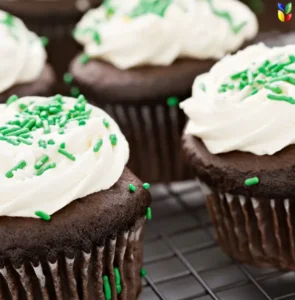
Engineering Particle Size for Structural Stability
Why Particle Size Matters
Sprinkle particle size influences three key performance factors:
- Heat resistance
- Surface adhesion
- Visual uniformity
Particle size determines how heat distributes through the sprinkle and how the structure holds during baking.
Small Particles (Jimmies)
Typical diameter: 1–2 mm
Benefits:
- Even distribution
- Minimal batter disruption
- Smooth visual coverage
However, small particles may melt faster if the sugar matrix lacks a proper crystallization structure.
Medium Particles (Confetti or Shamrocks)
Typical size: 3–5 mm
Benefits:
- Strong visual identity
- Seasonal branding
Challenges:
- Greater exposure to thermal stress
- Higher risk of warping or edge degradation
Blended Sprinkle Systems
Many spring and St. Patrick’s Day products use multi-particle blends, including:
- Green jimmies
- Shamrock shapes
- White pearls
- Floral decorations
Maintaining particle integrity across multiple shapes requires precise formulation to prevent differential melting.
Research from Kansas State University’s Grain Science Department highlights that particle size uniformity improves baking stability and reduces structural collapse in sugar-based decorations.
Sugar Matrix Engineering
Sprinkle durability depends heavily on the sugar crystal structure.
Most high-heat sprinkles use combinations of:
- Sucrose
- Corn starch
- Glucose syrup
- Stabilizers
These ingredients influence crystal strength and heat response.
Key formulation goals include:
- Controlled crystallization
- Low hygroscopicity
- Structural rigidity
A stable sugar matrix prevents:
- Surface cracking
- Color bleeding
- Shape deformation
For example, jimmies rely on extruded sugar structures, while shaped sprinkles such as shamrocks are typically pressed or molded sugar pieces.
Each manufacturing method requires a tailored formulation to ensure structural performance during baking.
Preventing Color Bleeding in Batter
Color migration is one of the most common failures in sprinkle performance.
When exposed to moisture, dyes may dissolve and diffuse into the surrounding batter.
Strategies to prevent bleeding include:
Fat-Based Barrier Coatings
Lipid coatings protect pigments from moisture exposure.
Benefits:
- Reduced dye diffusion
- Enhanced oven stability
- Improved shelf life
Sugar Shell Encapsulation
Encasing pigments within hardened sugar layers reduces direct contact with batter moisture.
Optimized Dye Concentration
Higher dye concentration can allow for smaller pigment particles, reducing surface exposure and limiting bleeding potential.
The American Chemical Society notes that coating systems significantly improve color retention during thermal processing.
Application Efficiency in Commercial Baking
Even well-engineered sprinkles fail if application methods are inefficient.
Commercial bakeries must optimize sprinkle use to achieve:
- Uniform coverage
- Minimal waste
- High line speed compatibility
Application typically occurs through:
Pre-Bake Inclusion
Sprinkles are deposited onto the batter before baking.
Advantages:
- Strong adhesion
- Integrated appearance
Challenges:
- Exposure to full oven temperature
- Higher risk of deformation
Post-Bake Decoration
Sprinkles are applied to icing or glaze.
Advantages:
- Maximum color retention
- Expanded design flexibility
Challenges:
- Additional processing step
- Adhesion control
Automated Sprinkle Depositors
High-volume bakeries rely on automated dispensing equipment to control sprinkle flow rate and distribution density.
Proper particle size calibration ensures:
- Consistent feed-through dispensers
- Reduced clogging
- Uniform decorative coverage

Engineering Seasonal Sprinkle Blends
Seasonal blends require careful balancing of color and shape performance.
For spring and St. Patrick’s Day baked goods, typical blend components include:
- Green jimmies
- Shamrock shapes
- White or gold pearls
- Floral decorations
- Confetti pieces
Key engineering considerations include:
Density Matching
Particles must have similar densities to prevent segregation during shipping and handling.
Heat Tolerance Alignment
Shapes within the blend must tolerate similar oven temperatures to avoid mixed performance.
Visual Contrast
Contrasting shapes and colors improve product shelf impact while maintaining brand identity.
Proper blend design ensures decorations remain visually balanced across batches.
Shelf Stability and Storage Considerations
Even well-designed sprinkles degrade under poor storage conditions.
Environmental factors affecting performance include:
- Humidity
- Temperature fluctuations
- Light exposure
Optimal storage conditions include:
- Relative humidity below 50%
- Temperatures below 25°C (77°F)
- Airtight packaging
Proper storage protects pigment stability and structural integrity before production use.
According to the USDA Food Product Storage Guidelines, controlling moisture exposure significantly improves shelf stability for sugar-based ingredients.
Quality Testing for High-Heat Sprinkles
Before commercial rollout, sprinkle formulations typically undergo testing such as:
Bake Stability Tests
Simulated baking cycles evaluate:
- Color retention
- Shape integrity
- Structural durability
Moisture Migration Testing
Measures dye diffusion and coating effectiveness.
Distribution Analysis
Ensures particles disperse evenly during automated application.
These tests help ensure reliable performance in large-scale bakery operations.
Why Ingredient Sourcing Matters for Sprinkle Performance
Even the best sprinkle design fails without reliable ingredient sourcing.
Consistent quality requires a stable supply of:
- Sugar systems
- Food-grade pigments
- Stabilizers
- Coating agents
Supply chain disruptions can lead to variations in:
- color intensity
- moisture tolerance
- structural stability
Working with experienced ingredient sourcing partners helps brands maintain consistent product performance across seasonal launches.
Innovation Trends in Decorative Baking Inclusions
Several trends are shaping the next generation of decorative sprinkles.
Clean Label Color Systems
Brands increasingly explore plant-based pigments, though stabilization remains a challenge for high-heat applications.
Precision Particle Engineering
Improved manufacturing technologies allow tighter control of particle geometry and size distribution.
Multi-Layer Coatings
Advanced coating systems combine sugar, starch, and lipid barriers for enhanced thermal stability.
Sustainable Ingredient Sourcing
Food manufacturers increasingly prioritize responsible sourcing and supply chain transparency.
These innovations are helping brands develop decorations that maintain visual impact without compromising baking performance.
Strategic Considerations for Product Developers
For R&D teams creating seasonal baked goods, the key questions include:
- Will the sprinkle maintain color during baking?
- Is particle size optimized for the production line?
- Does the decoration distribute evenly?
- Is the ingredient supply chain stable?
Engineering decorative inclusions with these factors in mind ensures that seasonal launches perform consistently in commercial baking environments.
Conclusion
Green sprinkles designed for high-heat baking must deliver more than seasonal color—they must withstand thermal stress, maintain structural integrity, and integrate seamlessly into high-volume production.
Through careful control of pigment stability, particle size distribution, coating systems, and application methods, food developers can create decorative inclusions that maintain vibrant color and reliable performance during baking.
For brands launching spring and St. Patrick’s Day baked goods, engineering high-performance sprinkles is essential for maintaining product quality and consumer appeal.
If your team is developing seasonal baked products and needs reliable ingredient sourcing, FoodGrid supports R&D teams and manufacturers with scalable supply solutions.
Start your ingredient sourcing conversation by speaking with our specialist or request a sample.