




Texas SB 25: A Warning Label Requirement Now in Litigation
Texas Governor Greg Abbott signed Senate Bill 25 in June 2025. Section 9 of the law requires a warning label on packaged foods containing any of 44 listed ingredients. The list includes FD&C colors, bleached flour, bromated flour, azodicarbonamide, BHA, BHT, potassium bromate, propylparaben, and others (Covington). The warning requirement applies to food product labels developed or copyrighted on or after January 1, 2027 (Hunton).
The stakes are significant. Penalties enforced by the attorney general include injunctive relief and civil penalties of up to $50,000 per day per product, plus reimbursement of the state’s enforcement costs (Haynes Boone).
But the requirement is not currently enforceable against much of the industry. In early December 2025, the American Beverage Association, Consumer Brands Association, National Confectioners Association, and FMI sued the Texas Attorney General, arguing SB 25 unconstitutionally infringes on free speech and is preempted by federal law. On February 11, 2026, the federal court for the Western District of Texas granted a preliminary injunction, so the attorney general cannot enforce the warning requirement against the plaintiffs or their members while the lawsuit continues. Texas finalized its implementing rules nine days later, on February 20, 2026 (Haynes Boone).
So what does that mean for a sprinkle buyer? Three things:
- The injunction is preliminary. The case isn’t decided. A final ruling or an appeal could change the picture before or after January 2027.
- It covers the plaintiffs and their members. If your company isn’t a member of one of those associations, talk to your counsel about where you stand.
- Retailers aren’t waiting for the courts. Texas grocery buyers were asking suppliers for dye-free specs before the lawsuit was filed, and a court injunction doesn’t change what they want on their shelves.
California: Two Laws, No Injunction
California moved on dyes through two separate laws with different scopes, and neither is affected by the Texas case.
AB 418 (effective January 1, 2027) bans Red 3, brominated vegetable oil, potassium bromate, and propylparaben from all food sold in California. This is statewide, not limited to schools.
AB 2316, the California School Food Safety Act (effective December 31, 2027) prohibits Red 40, Yellow 5, Yellow 6, Blue 1, Blue 2, and Green 3 in foods served in California public schools, including cafeteria meals, vending machines, and fundraiser products. California’s public school system is the largest in the country, with more than six million students [LINK: California Department of Education enrollment data].
Red 3 is also headed out federally. The FDA revoked its authorization for food use in January 2025, with manufacturers required to reformulate by January 2027 [LINK: FDA announcement]. So Red 3 is effectively a national deadline now, not just a California one.
The Rest of the Map
Other states are moving too, with mixed results in court. West Virginia’s HB 2354 is a useful example of how these laws can split. A federal court paused the provision that would restrict the dyes statewide starting January 1, 2028, but the injunction does not affect the ban on the same dyes in school nutrition program meals, which took effect August 1, 2025 (Venable). Utah, Louisiana, and New York have their own restrictions or disclosure rules in various stages.
The pattern for a multi-state seller is clear: individual laws may be challenged, delayed, or narrowed, but the direction of travel isn’t changing. School food channels in particular are closing to synthetic dyes across several states at once.
Why Reformulating Is the Only Move That Works in Every Scenario
Consider your options if you keep synthetic dyes in your sprinkle spec:
- If Texas wins its case, you need a warning label on every refreshed SKU.
- If Texas loses, you still can’t sell into California schools after 2027, or West Virginia schools today.
- Either way, Red 3 is out nationally, and retail buyers are asking for dye-free specs regardless of legal status.
Now consider switching to natural sprinkles. Every one of those scenarios is covered. You don’t need to track the litigation, time your label refreshes around a loophole, or run two formulations for different states. One reformulation cycle covers every market.
Sprinkles are the logical place to start because their entire job is delivering color. For decades, that color came from Red 40, Yellow 5, Yellow 6, Blue 1, and Blue 2, exactly the dyes now in the crosshairs.
For R&D teams, that means a reformulation review now, with enough lead time to qualify a supplier, run production trials, and update labels before 2027.
For operations directors, it means confirming a natural sprinkle supplier can cover your reformulated spec at commercial volume, with documentation, on your production calendar. Qualification takes weeks, so it needs to be in your pipeline now.
For brand managers on private label programs, it means your Texas and California buyers are watching this, and a product delisted from a school program or flagged at category review doesn’t win that volume back easily.
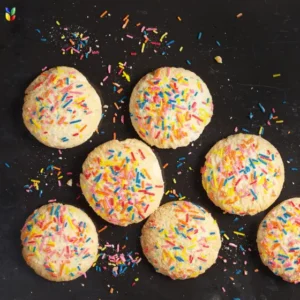
FoodGrid’s Natural Color Range
FoodGrid’s natural sprinkle line covers the full seasonal and year-round palette without Red 40, Yellow 5, Yellow 6, Blue 1, Blue 2, Green 3, or Red 3.
- Orange uses annatto extract. Heat-stable at standard commercial baking temperatures, covering Halloween through fall harvest.
- Red combines vegetable juice, annatto extract, and paprika oleoresin. The paprika adds heat stability, making it a stronger oven-applied performer than single-source natural reds.
- Yellow uses beta-carotene. Stable at commercial baking temperatures.
- Green uses turmeric and spirulina extract, covering spring, St. Patrick’s Day, and holiday programs.
- Purple uses vegetable juice for a deep, saturated color. Best for post-bake and no-bake decoration; less suited to high-temperature oven application.
- Blue uses spirulina extract for a clean, bright blue. Like most spirulina colors, it performs best in post-bake and no-bake applications [VERIFY heat guidance].
- Pink uses vegetable juice, covering Valentine’s Day, spring, and specialty programs.
- White carries no added colorant
Every color in the Natural Individual Colored Sprinkles line is NON-GMO Project Verified, soy-free, nut-free, dairy-free, and gluten-free, and suitable for vegan, vegetarian, and kosher programs.
For teams that want a ready-made palette, FoodGrid’s Natural Seasonal Blends cover Halloween, Thanksgiving, Christmas, Valentine’s Day, Fourth of July, and game day in pre-formulated combinations. For programs that need a different look, Natural Colored Nonpareils and Natural Sprinkle Shapes use the same natural colorant sources and ship under the same documentation, so one supplier qualification covers every format. Shapes are especially useful if you’re worried a dye-free product will look generic on shelf. It won’t.
The Documentation Your Compliance Team Needs
Compliance is a documentation question as much as a formulation one. Before approving any natural sprinkle supplier for a Texas or California program, get the following in writing:
- Colorant source disclosure per color. A named plant, botanical, or mineral source for every pigment, not a generic “natural colors” statement.
- Certificate of Analysis per lot, covering color, granulation, purity, and moisture.
- Allergen statements at both product and facility level. School and private label accounts typically require both.
- NON-GMO verification, if your label or account requires it.
- A negative declaration covering the full list you’re selling against. For California, that’s the AB 418 and AB 2316 ingredients. For Texas, ask for a declaration against all 44 SB 25 ingredients, not just the dyes.
FoodGrid provides all of this at onboarding. Review the qualification process at foodgridinc.com/purchasing.
Start Before the Deadlines Stack Up
The dates to plan around: January 2027 for Red 3 nationally and California AB 418, January 2027 for new Texas labels (subject to the litigation), and December 31, 2027 for California school food. Your production calendar needs to be ahead of all of them.
Contact our ingredient team to request samples and documentation at foodgridinc.com.
This article is for general information and isn’t legal advice. Laws and court rulings in this area are changing quickly, so confirm your obligations with regulatory counsel.
Real Ingredients. Smarter Solutions.


