





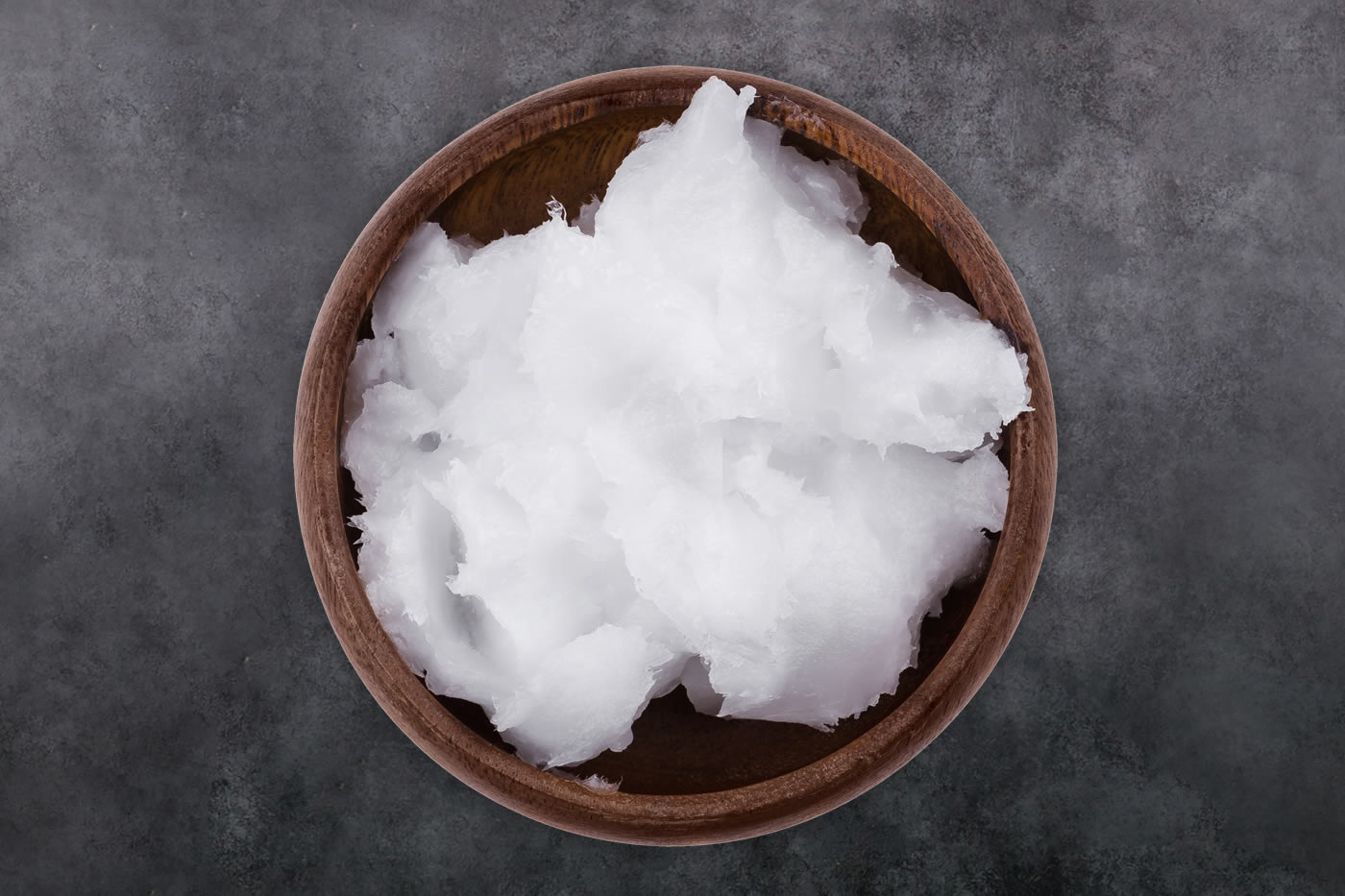
Shortening and lard are both 100% solid fats essential to baking and frying, but they are fundamentally distinct in origin, crystalline structure, flavor profile, and functional performance.
- Lard is rendered pork fat. It features large fat crystals, a mild savory note (unless deodorized), and a lower melting point, making it famous for traditional flaky pie crusts, savory pastries, and flour tortillas.
- Shortening is vegetable-based fat (commonly palm, soybean, or cottonseed oil) engineered to remain solid and stable across wider temperature ranges. It is 100% plant-based, neutral in flavor, dairy-free, and ideal for structural frostings, high-spread cookies, and certified clean-label bakery lines.
Understanding how their physical and chemical attributes differ determines recipe outcomes, dietary certifications, and line performance.
Direct Comparison: Shortening vs. Lard
| Specification / Attribute | Vegetable Shortening | Pure Lard (Rendered Pork Fat) |
| Source Origin | 100% Plant-derived (Palm, Soy, Cottonseed) | 100% Animal-derived (Pork fat) |
| Water Content | 0% (Pure fat) | 0% (Pure fat) |
| Flavor Profile | Completely neutral | Mildly savory / pork undertone (unless ultra-refined) |
| Melting Point | High: ~115°F – 120°F (46°C – 49°C) | Moderate: ~86°F – 113°F (30°C – 45°C) |
| Fat Crystals | Small, fine beta-prime (β’) crystals | Large, coarse beta (β) crystals |
| Dietary & Religious Suitability | Vegan, Vegetarian, Kosher, Halal | Omnivore only (Non-Kosher, Non-Halal, Non-Vegetarian) |
| Aeration / Creaming | Superior (holds air cells for frostings/creams) | Low (poor creaming capability) |
| Trans Fat Status | 0g in modern formulations (non-hydrogenated palm/interesterified) | Naturally 0g industrial trans fats |
| Primary Use Cases | Buttercreams, cookies, cakes, high-temp deep frying | Flaky pie crusts, biscuits, tortillas, savory baking |
What Sanding Down the Science Means for Texture
The difference in how lard and shortening perform in dough comes down to crystal morphology and fat plasticity.
- Crystal Size and Flakiness (Pie Crusts and Biscuits)
- Lard forms large beta crystals. When cut into flour, lard remains in distinct fat pockets rather than blending smoothly into the flour proteins. During baking, these large pockets melt, leaving distinct structural voids that yield unmatched, visible flakiness in pie dough and biscuits.
- Shortening forms tiny beta-prime (β’) crystals. Shortening coats gluten strands evenly. This coats flour proteins effectively to prevent gluten development (“shortening” the dough strands), yielding an extremely tender, crumbly, and melt-in-the-mouth crumb rather than layered shards.
- Melting Point and Dough Workability
- Lard softens quickly. With a melting range between 86°F and 113°F (depending on whether it is leaf lard or back fat), lard becomes greasy at warm room temperatures. Lard doughs demand chilling to prevent the fat from smearing into the flour.
- Shortening holds structure. Formulated shortening features a broader plastic range and higher melting threshold (~115°F–120°F). Doughs made with vegetable shortening handle warmer plant temperatures and higher mechanical shear without breaking down.
The Zero-Click FAQ: Answering Quick Baking Questions
Can you substitute shortening for lard (and vice versa) 1:1?
Yes. Because both shortening and lard are 100% pure fat with zero water content, they substitute for each other at a strict 1:1 ratio by weight or volume (1 cup shortening = 1 cup lard).
| Crucial Adjustment: When substituting shortening for lard, expect a neutral taste and slightly more crumb tenderness than flaky layering. When substituting lard for shortening, verify that the recipe is not a buttercream frosting (lard will melt and taste savory) and that animal-derived fat complies with your dietary needs. |
How do both compare to butter?
Butter contains 16% to 18% water and roughly 80% to 82% milkfat. When substituting lard or shortening for butter:
- Multiply the butter weight by 80 to 0.82 to calculate the fat needed.
- Add back the remaining weight as liquid (water or milk) to balance hydration.
- Expect cookies and pie crusts made with 100% shortening or lard to hold shape better with less spread, because they lack the early-melting water and milk solids found in dairy butter.
Is lard healthier than shortening?
Historically, shortening contained partially hydrogenated oils high in artificial trans fats. Following modern regulatory bans (such as the FDA’s PHO ban), commercial shortenings are produced using non-hydrogenated palm fractions or interesterified vegetable oils, eliminating industrial trans fats entirely.
- Lard composition: Roughly 40% saturated fat, 50% monounsaturated fat (primarily oleic acid, the same fat in olive oil), and 10% polyunsaturated fat. It contains dietary cholesterol (~12 mg per tablespoon).
- Modern Shortening composition: Contains zero dietary cholesterol and zero trans fats. Palm-based shortenings are naturally balanced in saturated and unsaturated fats to deliver clean plasticity without chemical hydrogenation.
Does lard taste like pork?
- Leaf lard: Rendered from the visceral fat around a pig’s kidneys, leaf lard is pristine, soft, and nearly odorless with minimal flavor. It is the premier choice for traditional sweet baking.
- Standard / commercial lard: Rendered from general trimmings, it can impart a distinct, savory flavor noticeable in light or sweet bakery items, but prized in tamales, tortillas, and savory crusts.
- Vegetable shortening: Entirely flavorless, carrying only the flavors of added vanilla, sugar, butter flavorings, or cocoa.
Application Breakdown: Which One Belongs in Your Bowl?
Choose Lard When:
- Baking traditional flaky pie shells: Lard’s coarse crystals create distinct pastry layers that butter and shortening struggle to replicate on their own.
- Making heritage regional items: Authentic Mexican flour tortillas, tamales, and British meat pies rely on lard for structural chew and savory richness.
- Savory frying: Lard delivers a crisp exterior and rich finish for fried chicken or savory fritters.
Choose Shortening When:
- Whipping frostings and fillings: Shortening’s micro-crystal structure traps air during mixing, producing high-volume, shelf-stable frostings that do not melt down at room temperature.
- Developing clean-label, vegan, or certified products: Shortening accommodates plant-based, Kosher, and Halal specifications that strictly exclude pork byproducts.
- Formulating bakery lines with long shelf-stability: Modern palm-based shortenings exhibit superior oxidative stability, eliminating the rancidity risks associated with animal fats.
- Requiring pure flavor transfer: In delicate sugar cookies, white cakes, or fruit pastries, shortening provides fat lubricity without altering the product’s intended flavor balance.
Commercial Sourcing Considerations for Product Development
For commercial bakeries and food manufacturers, transitioning between animal fats and vegetable shortenings involves key production-line adjustments:
- Emulsifier integration: High-ratio liquid and solid cake shortenings incorporate mono- and diglycerides that disperse fat evenly in high-liquid, high-sugar batters. Lard lacks these engineered emulsifiers, requiring reformulation if used in commercial cake lines.
- Supply chain and storage: Lard requires consistent cold-chain management or controlled temperature staging to prevent oil separation and oxidation. Industrial palm-derived shortenings (like the BakeGrid portfolio) remain shelf-stable in standard totes, drums, or bulk cubes without refrigeration.
- Clean-label consistency: Sourcing identity-preserved, non-hydrogenated, trans fat-free vegetable shortening provides lot-to-lot specification control across melt points, iodine values (IV), and solid fat content (SFC) curves.


